
Core Values: Your Real Definition of Success

 iHeartRadio iHeartRadio
 Apple Podcasts Apple Podcasts
 Spotify Spotify
 Pandora Pandora
 Youtube Music Youtube Music
 Deezer Deezer
 Spreaker Spreaker
 Podcast Addict Podcast Addict
 Castbox Castbox
 PocketCasts PocketCasts
 Castamatic Castamatic
 Goodpods Goodpods
 Overcast Overcast
 Podurama Podurama
 Podverse Podverse
 YouTube YouTube iHeartRadio iHeartRadio Apple Podcasts Apple Podcasts Spotify Spotify Pandora Pandora Youtube Music Youtube Music Deezer Deezer Spreaker Spreaker Podcast Addict Podcast Addict Castbox Castbox PocketCasts PocketCasts Castamatic Castamatic Goodpods Goodpods Overcast Overcast Podurama Podurama Podverse Podverse YouTube YouTube
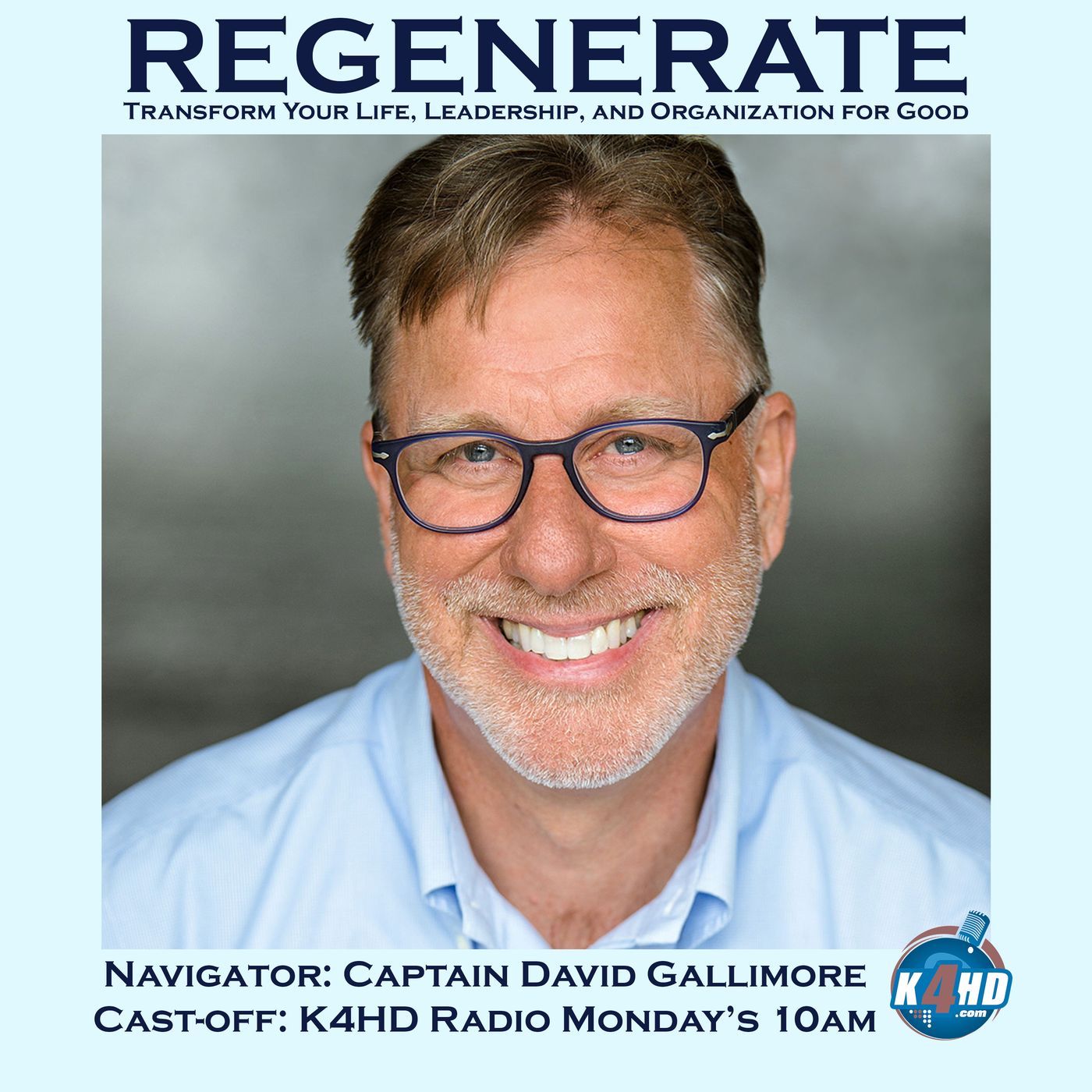
You don't need to invent your definition of success — you need to excavate it. Like an archeologist on a historic dig, your Core Values have been inside you all along, shaping your choices before you ever named them. Drawing from his Regenerate YOU! playbook, Capt. David shows you how to reflect, spot the recurring themes, and distill your top values — then "test-drive them in the wild" until they fit like a glove. Align your days with what you truly value, and work starts to feel like play.
REGENERATE is broadcast live Mondays at 10AM PT on K4HD Radio - Hollywood Talk Radio (www.k4hd.com) part of Talk 4 Radio (www.talk4radio.com) on the Talk 4 Media Network (www.talk4media.com). REGENERATE TV Show is viewed on Talk 4 TV (www.talk4tv.com).
REGENERATE Podcast is also available on Talk 4 Media (www.talk4media.com), Talk 4 Podcasting (www.talk4podcasting.com), iHeartRadio, Amazon Music, Pandora, Spotify, Audible, and over 100 other podcast outlets.
Become a supporter of this podcast: https://www.spreaker.com/podcast/regenerate--6862974/support.
0:14 This program is designed to provide general information with regards to the subject matters covered. This information is given with the understanding that neither the host, guests, sponsors, or station are engaged in rendering any specific and personal medical, financial, legal, counseling, professional service, or any advice. You should seek the services of. Competent professionals before applying or trying any suggested ideas. Ahoy! Captain David Gallimore welcomes you aboard the Regenerate Show, live Mondays, 10 a.m. Pacific on K4HD Radio at K4HD. com. We dive into the real messy work of transforming our lives, leadership, and organizations. Bring your hot mess and confusion. Believe with clarity, courage, and confidence. Together, let's strengthen our resilience, accelerating the health of ourselves, people, planet, and profits. Now, here's your host, Captain Dave, your personal regenerator. All aboard!
1:28 Ahoy, friends, and welcome to Regenerate. I'm Captain Dave, your personal regenerator. This is a safe space for true vulnerable stories from the messy middle of our personal, professional, and organizational transformation. Stories we need now. We've never needed them more amid all the global political and climate uncertainty and the daily disruption of generative AI. I'm here to point to hope. How can you become someone who brings more resilience, purpose, and authentic energy to the people you love and if you're so moved, to our planet, our only ship. My evolving definition of regeneration is simple. It draws on 3.8 billion years of life's own logic, where we restore vitality across every living system, ourselves, our families, our teams, our organizations, our communities, moving beyond sustainability, which is to do no harm, to become regenerative, like a healthy forest, endlessly regenerating, resilient, and abundant life. So I created Regenerate, this show, to lift purpose-driven leaders up and connect them in bonds of love and adventure, building, leadership, and impact. Turns out those are my core values, which is the subject of this episode.
2:55 As a guide, a maritime captain, and a lifelong learner, I'm truly living my ikigai, my Reason for Being, which we covered in last week's show. So if you're curious about what you're passionate about, what you are really gifted at doing, what does the world need, and what can you get well paid for, check out last week's episode on Ikigai. Whether you're a longtime crew or joining for the first time, welcome aboard. I hope you discover something today that changes how you see yourself and what's possible. If you enjoy the show, please share it with someone who needs it and consider being their teacher. Here's my promise. First, we'll have fun today. Second, you'll leave inspired. And third, you'll leave with one thing you can apply, hopefully, before you sleep tonight. So grab a pen because transformations happen here.
3:49 So our theme today is all about core values. And what's fascinating to me about core values is if I had known what I now know, Oh my gosh, I would be in such a different place. You don't need to invent your definition of success. You need to excavate it like an archaeologist on a historic dig. Your core values have been inside you all along, shaping your choices before you ever named them. Drawing from my Regenerate You playbook, which I'm going to be showing in a moment, I'm going to show you how to reflect on and spot the recurring themes and distill your top values. And then I'm going to invite Rebel, my ACE producer, and we're just going to be hearing her today. Won't be seeing her.
4:42 And I'm going to help her kind of identify through some of her childhood and adult couple stories. We're going to see if we can archaeologically dig out from her own life experience one or two core values. And then in the third section, third part of our show, I'll be speaking about how do we live these fully? And then in the process of living them, how do we refine them over time to really help them fit like a glove? Because at the end of the day, they can be your definition of success. I use mine, for example, before I invest valuable attention. As a neurodiverse ADHD, that's probably even more valuable than my time. But that's certainly the second resource that I use my core values to help me. And then third is money. So attention, time, and money. When I got really crystal clear in my late 50s about my core values, my life really took off.
5:45 And it flowed a lot better because I was making choices about where to spend my attention, time, and money. that were much, much more aligned with what I value. So when you align your days with what you truly value, your work starts to feel like play. I get to live that every day. And I believe that your next epic chapter begins with one honest question. What does success really mean to you? So what are values and what are core values and why do they matter? So It turns out the research is pretty clear that across the globe, human beings share a set of common values. Now they may express them differently, but generally speaking, peace, health, and family or community, depending on how you define this, are the top three core values. And they're rather aligned regardless of gender, ethnicity, age, So values, in my experience, can guide societies as to how we might live our lives in a happier, healthier, wealthier way. And different cultures, for example, in Asia, tend to emphasize education and learning. They tend to value their elders, whereas here in the United States,
7:16 and perhaps even in Europe and elsewhere, other countries that are in a go-go developed world, if I can use that distinction, um, you know, value much more independence value achievement, a value, uh, certainly family, but maybe not at the same level of prioritization relative to say one's career or making, making money. So, you know, different cultural norms, uh, have been showing up in the research, but that basic foundational layer really hasn't changed over the years. So what are core values? Well, so I learned about this in my late fifties when I was participating in a personal development group and I got to learn about core values. These are the values that on a Monday morning, when you are not interested in getting out of bed, These are the core values, or these are the values that will get you out of bed. And how I've used my core values, which are love, which is an uber value that includes family and community, empathy, grace, some of those emotional quotient, softer skill values. But I live to serve my family. And if I didn't have my family, my wife, Margaret of 36 years knowing her, 35 years of marriage,
8:51 and my adult son, Ian, and my adult daughter, Catherine, and now a grandfather twice over. So we're now, we've just welcomed into the world on July 28th, Alvin, Jeffrey, David. I know, I made the bar, made the list, Rooney, nine pounds, what a head of hair, and what a pair of lungs on that young lad. And our daughter, Catherine, is doing great. And Margaret got to experience that in the birthing center, which, what a special thing. So family for me is a core value, but it falls under that Uber set of my number one core value of love. Venture, I used to have a challenge. I still like a challenge.
9:38 I like solving problems. If I don't have a problem to solve, I've been known to create my own problems so I can solve that. Don't recommend that, by the way. And so when I decided to, I didn't want as many problems in my life, I pivoted my core value to adventure. And I have way fewer problems and way more. full adventures. The third is kind of a hybrid of build, design, build. So I love the ideation. I love the creative process of ideas. But then I really, really do love to see them built and see that arc. from the genesis of an idea right through to the execution. And my whole 40-year career has been working with really smart people and solving really hard problems, taking an idea and bringing that right through to execution. So that's what I have been let up over the years doing. And then my fifth word is leadership. My belief is that you can't really take an idea to a result Without leadership, either personal leadership or influence with others or position power, in other words, a title and positional authority. So without leadership, nothing happens. And so I'm all about how do I find the right method, the right approach to leadership in
11:12 each and every situation. So as an executive coach, for example, I'm really a guide on the side. I don't have any positional power, nor would I want positional power over my clients. I have persuasive power, and I have the ability to lead from the side, lead from not the sage on the stage, but the guide on the side. So that's one example of changing a value leadership, but different forms that it can take. And we'll be talking about forms when we get into part three. How do you live your core values and how do you refine them? And then my last core value is impact. And impact for me used to have a core value of results. Okay, so results we all love. We love outcomes. But as I get older, I'm recognizing that time is ticking and I better make the best use of my time, especially as it relates to my family. and certainly my clients, and by extension, helping improve the health of our communities and our people, our planet. So that triple bottom line of people, planet, and profit. If I do that well, if I show up authentically and vulnerably and live my core values, then what will inevitably follow is results and outcomes.
12:44 but I want to make a bigger impact, hence starting this radio show this year. So this is episode number 25, and it's a slow roll, as many of you that perhaps have done your own podcast or have had a radio show. It just takes time to build an audience, and I'm hopeful that I just keep showing up and living my core values and sharing valuable information that the audience will come. And If I do those things well, don't worry about the outcome. Don't worry about the results. Don't force something, but stay in flow, which is a very regenerative way of thinking, right? Nature doesn't rush from winter to summer. Nature knows, okay, we're going to go from winter to spring, spring to summer, summer to fall, fall to winter. And it rinses and repeats that cycle because it knows that there's a process to life. And so I'm learning. Oh, my God. It's been one of the more painful lessons is learning how to be in flow and not try to push things before their time.
13:54 So impact is all about creating value, not for me, but for the person that I'm collaborating with, creating value together, certainly with clients, meeting them where they are and creating value at any given point. And if I can scale that to create a greater impact, that's kind of what I'm exploring right now. And the radio show is a part of that. So that's the distinction between values and core values. Values we share as human beings, core values are very particular to each of us. And frankly, I wish I'd known this 30 years ago in my 20s.
14:36 And so whenever I'm around young people, I spend quite a bit of time when I'm with them in small groups, or if I have the privilege of them being my client, I begin the first playbook with our collaboration is core values. So they matter because if we're clear about our core values, and this has been my experience, then we're able to say no to things that really don't serve us. They might serve the tech bros staying on Facebook or on X or or LinkedIn, you know, longer than is really valuable to us, but we kind of get sucked into the matrix. Dr. Arthur Brooks, the happiness doc who has his podcast office hours, which I recommend, he talks about that so many people are living in the simulation and I can catch myself living in the simulation, you know, just being living in a digital world. So this idea of, you know, saying no to things. And by getting clear about core values for a neurodiverse ADHD person, it's been life-changing because now I have a rubric. I have a decision-making criteria that I can use. It's my definition of success that I can use to say, no, thank you, and not have as much. I can't say it's completely eliminated, but not as much FOMO, fear of missing out, So
16:08 that's been very freeing. And of course, we all know that when we focus on things that really light us up, we make our work our play. If we can do that with other people who also share our core values. So this is why I think being aware of them so that then if you're in a current job, how do you create the environment that's more supportive of your core values? So having a discussion with your manager, or your manager's manager, or if you're currently looking for a better opportunity, I strongly, strongly counsel to first get clear about your core values. If you're not, if you are, dust them off and use them as a really useful tool to help us to help you have greater discernment about, well, what's the better environment? Am I leaving a current culture and environment, hoping for greener pastures, that might not work out so well. But if you're really clear about your core values, then you can use that as a rubric, as a yardstick to measure this new opportunity. And many organizations now are very explicit about their values because they recognize that when they attract people that share their values and the people that are joining these organizations are clear about their values, then it's just another deeper level of alignment across teams, across the organization. And I think the
17:40 last thing I'll say about core values and why do they matter is as a maritime captain, when I'm teaching sailing on the water or when I'm doing a delivery of a sailboat, which are two of my other interests, in addition to transformational guiding, executive coaching, teaching, and this radio show, I have to know where I'm going. I have to know where I am. I have to know where I'm going. And what happens between now and then is really kind of at the whim of Mother Nature, certainly on a sailboat. And so core values are part of that, where am I going? If we don't know where we're going, which is also part of the theme of last week's show, the Ikigai, that's another kind of helpful frame of answering the question, where am I going?
18:32 It's like... Alice in Wonderland, when she gets to that T in the road, and the Cheshire Cat is asked by Alice, well, which road should I take? And the Cheshire Cat asks, well, where do you want to go? And Alice says, I don't really know. And so the Cheshire Cat, in his very erudite manner, says that it doesn't matter which road you take. And I think a lot of us, I was certainly one of those people who kind of went from one thing to the next, uh, trying to find my way. And sometimes I made really great decisions like joining IBM and, and Boeing and Capgemini.
19:14 And then I made some really terrible decisions and really cost my family a lot of heartache, um, including a couple houses that we had to sell when things didn't go well. Um, Yeah. So if I seem very passionate about the value of core values, you would be right. Because knowing what I know now, I probably would have made more informed decisions based on the intrinsic value of me and what mattered and where I was really strong and where I would be a better fit. So I hope that answers the question now, why do they matter? So what I'd like to do is ask Rebel to start our commercial. And when we come back, I'm going to invite her to be my guest. And we're going to explore some stories from her childhood and perhaps recently as well. And we're going to be archaeologists together, and we're going to help her get a little clearer about what potentially might be her core values. We won't know until she test drives them in the wild, which we'll talk about in part three. So Rebel, if you'd be so kind to begin our commercial break.
20:27 You're listening to Regenerate with Captain Dave, your personal regenerator on K4HD Radio. We'll be right back. are you feeling overwhelmed are you ready to regenerate and live the life of your dreams Start the transformation now. Call Captain Dave at 253-237-2558. Stop overthinking. Again, call 253-237-2558 or go to regenerativeworldgroup.com to book a free, no obligation clarity call. Let's get back to regenerate right here on K4HD Radio for more life-changing transformations. Here's your host, Captain Dave, your personal regenerator.
21:24 Welcome back. So if you're just now joining us, we've been talking about core values and how it can be a decision-making criteria, a rubric, a definition of success for you and guide how you spend your valuable attention. time, money, and really to create greater flow, greater joy in your day-to-day. When you make your work your play, you can really live a rich and full life. And I'm here to tell you, I don't have easy days, but I have days that are very, very aligned with my core values of love, venture, creating and building, leadership, and impact. So welcome back. We're now inviting Rebel our show producer. Hi, Rebel.
22:12 Happy Monday. Hi, Captain Dave. So glad that you are at my side after, what, 25 weeks now. And thank you. I have not said this publicly. I haven't had the opportunity to say this publicly, but you are a big reason why I show up every Monday, whether I feel like it or not, because you always bring joy and curiosity. And when we do our little debriefs at the end of the show, you help me Be better. Be a better man. Be a better media host. And so for that, Rebel, namaste. Thank you, my friend. Appreciate you. That's so sweet. Thank you. Well, well-deserved. So what Rebel has posted in our show is the core values playbook. Now, I don't want to go into too much detail about this, but maybe Rebel, I guess I can flip slides, can't I? All right, perfect.
23:09 So here's the lighthouse kind of metaphor. Where are you going? Follow the light. Oh, so this is the Ikigai one. Sorry, my bad. Let me, can you go? I removed the other one, didn't I? Okay, nevermind. That's on me. I will post in just a moment the core values one instead of the Ikigai one. I just saw it there and I thought, oh, maybe I'd already uploaded it, but that was last week. So shame on me. Live and learn. So what I wanted to do with you, Rebel, was ask you if there was a time in your life, especially for this first story, when you were young, could be five or six years old, seven years old, before you really got indoctrinated with school and other people's expectations and society's expectations. How did you like to play? What was your What was your mode of play? What did you really enjoy doing when you were a kid?
24:11 One of the earliest memories, my dad gave me a chocolate bunny that played music, like a stuffed animal. And I think I carried that everywhere until my mother took it away from me. Oh, my goodness. So I had a favorite stuffed bear as well. And he went everywhere. In fact, that bear was so ragged. We finally had to give him away. I think we gave him away. My mom said we gave him away, but we probably brought him into the waste bin, but oh well. So when you were a kid and you had that stuffed animal, did you do quite a bit of fantasy storytelling? Often young girls, I know my daughter, Catherine, I see it even with Daisy, our granddaughter, very vivid imaginations. How did you play with that beloved stuffed animal?
25:06 I'm fairly certain we went on adventures together. Yeah. You know, picking pecans out of the yard, out of the pecan tree and hiding behind the shed and the garage and all of that stuff. You know, we went on adventures. So was storytelling adventures, is that something that has been a part of your life now as you grew up, and certainly as an adult and a producer, you see that same kind of interest in people, interest in adventure, maybe a little bit of storytelling mixed in.
25:48 I do love to write. Well, I used to. I used to love to write when I had time, and now apparently time is not my friend. Right. Do you have an example as an adult where kind of friendly... in this case, like the stuffed animal, but a friendly person or a small group, going on adventures, telling stories. Do you have an example in your current life or before you got so busy as a producer of Talk4Media? Once upon a time before I got sucked into this adult work thing, I used to go on adventures. I used to re-spur the moment and just go do things.
26:30 Tell us more about that. What were some of the things that you loved to do when you had more time? Oh, wow. Let's see. That's a hard question to answer sometimes because when you get stuck in this whole adult thing, you forgot what was fun. You forgot what made you happy. You forgot everything, pretty much. Everything goes to the wayside and you don't know what to do anymore. You don't know how to answer those questions. So I'm bringing you back earlier before you got busy. Yeah, I know. I can't. I mean, I'm trying to think. I think I used to like to ride my bike. Not a motorcycle, just a regular bicycle. I used to like to write.
27:18 I definitely used to like to write. I used to love to take pictures and video. Well, excellent. Those stories that you've just shared, your energy shifted a little bit. I get pretty good at reading people's voice inflection and energy, and you were laughing. And for a moment there, I saw you kind of going back into that childhood body and recapping and even reliving, just for a sec or two, what it felt like. Tell me another story of where you were in an environment, perhaps modern, as an adult, right? But it could have been, you know, as a teenager or young adult where your day was really difficult. Like there was no flow at all to be had.
28:07 Difficult days. Yep. Difficult days. Wow. Any time in life or just? Well, and more recently, maybe without getting talk for media in any trouble. Yeah. Well, we can talk about the last year and two months, I guess. In the past year and two months, I have lost four people in my life. It's been difficult. That is incredibly challenging. You know, that quantity of beloved in that short a time, I can only imagine what that must be like. Yeah. And what do you think, besides the loss of them, it was likely... relationships that you had right how you spent time who will fund things that you might have done with each of them is is that perhaps what was what was missing you can you say more if that's true.
29:07 Quite possibly i mean i had i had relationships with these people i mean one of them was my mother um then an aunt another aunt and most recently my. Puppy well having lost our asha our siberian husky That's a relationship that I miss so much because she was a big part of my life. In fact, I haven't had the heart to turn off the 5 p.m. alarm because that was when she would come and bring her nose against the laptop lid and shut the laptop lid and say, you're taking me for a walk. And I think she was very adventurous. So I got to feel love, adventure.
29:51 We didn't create or build anything other than we built a really deep relationship over those 13 years. So what was it about your project? Relationship with your puppy that you miss the most. All right. Well, um, everything. I mean, he wasn't just a dog. He was my baby. So do you miss the opportunity to kind of nurture? Sorry. Was it a, a him or her? So do you miss kind of that nurturing part of you that it doesn't have the same ability to express that with him? What was, what, what was his name? His name was Nimbus. Nimbus. Very cool. What was the inspiration for the naming your dog Nimbus?
30:37 Cumulus Nimbus. Oh, yeah. Very cool. That's so fun. So, yeah, do you miss the nurturing aspect in that relationship? I pretty much miss everything. I wake up in the morning. He's not on the side of the bed. He's not in bed. He's not here. You know, you wake up, you don't have to go feed him anymore, you know, because he's not there to eat. He's not there to talk to. Yeah. Isn't that amazing how, even though they can't articulate English words, they can communicate on, on a very, very clear level. And my understanding is, you know, some of the lever or breeds, they can amass like 300 word vocabulary that we speak those words and they know exactly what, what we mean. Did you have that kind of a relationship too?
31:27 You could, you could, Nimbus would sense when you were happy and joyful and also sense when you were needing a little more love, a little more cuddle. Oh, absolutely. He knew me best. Yeah. I didn't realize that. Margaret and I had kind of resisted having a pet. And to my daughter, Catherine's credit, she wrote this essay in high school about how she was going to be a responsible dog owner. And I'd been traveling too many months out of the year and felt guilty. And so, uh, I was convinced that what was the real closer was not the essay, but the pictures of that Siberian Husky, uh, baby, baby pictures. Oh my God. He was little fur balls. And then, uh, we caught Margaret just the right time. And it was funny.
32:18 She said, uh, I'm not going to have anything to do with that, that dog that's Catherine's dog. And of course, Catherine had her sign a little, contract about how she was going to pick up the poop and, you know, wash the dog and clean the dog. Uh, we get the dog about eight weeks later, the breeder brings the dog to SeaTac airport and hands this fur ball to Catherine. And I would say within less than a week, um, that was Margaret's dog and certainly Catherine's too, but definitely Margaret had a little Asha, a Siberian Husky, your bread, uh, just won us all over. And so, you know, my core values of love and adventure, and I would say even, you know, the opportunity to let her lead and me be a leader. So we got to give and take, you know, dogs can be sometimes very clear about their needs.
33:14 Like Asha, you're taking me out for a five o'clock walk, you know, showing leadership, which I really respected, made me a better person. that loss of love and adventure and leadership. So the reason why I'm asking these kind of two sides of the coin, right? The positive childhood, you know, what lit you up? What did you love to do? And how might that have shown up in your best days? That's usually a pretty good indicator of some potential core values to explore. And then the opposite of the coin, which is when you're absolutely not experiencing something and you feel that loss and you do almost anything to try to find it in some other form or fashion. So based on the positive story and the negative story, and again, my condolences for four special beings in your life, the loss.
34:20 I know that we've talked offline and it's still a process that you're working through. And I hope we can invite you back and we can talk about that because I've had my losses as well, and I'm still mourning that. And I think there's a lot of people that would value hearing, you know, your views on this. I'm happy to facilitate that, you know, if you're interested. But back to the core values, are there one or two words that you're starting to think, hmm, that could be a core value for me? Anything pop into your heart and your head? No, unfortunately not. I don't know at what point I lost the core values, but I just don't know what they are for real. And, you know, I want to establish these things because I do believe everybody should have them, at least know what they are. But unfortunately... The thing that gets me out of bed is, well, no, everything gets me. I wake up in the morning and I'm happy to wake up. But the have-tos, like I have to go to work. So that's, I work. I throw myself into work. And I don't know if that's on the list of core values. It probably shouldn't be because if you're living the work, then you've got a problem.
35:37 I fortunately have a job that I love. I enjoy my job. Most people get up and they hate their job. They don't want to go to work. I look forward to coming to it because I enjoy my job, but not everybody has that position. So I'm so glad you raised that point. So what is it about your job? Maybe one or two things, because time is never our friend. I want to talk a little bit before we break, wind down about how to live, test drive these core values and refine them over time. So what's one or two aspects of your current role, your current environment, your current job that you just You just really love. I love making sure people are enjoying their, doing their shows. I, you know, my top thing is to make sure everybody enjoys doing their shows and everybody gets something out of doing their shows. That's important to me.
36:33 So is, is it fair to say that you are a person who's in service to others? I would, I would guess you could look at it like that. I mean, I'm just asking. If it could resonate because when you talked about Nimbus, you know, you miss feeding him, you miss walking with him, you miss cuddling him. I think, I think there's a nurturing core value somewhere in there, by the way, nurturing is part of my Uber love for value. And I think there's also an adventure potential adventure core value. And then we've just kind of archeologically dug into what, What's that one thing that came top of mind about why you love what you do, which is making sure that the media hosts like myself are enjoying it, which by the way, you're exceeding my expectations.
37:27 So thank you every Monday. And I would also invite you to consider if there's another core value, and it just popped into my head and then it went out just as quickly, learning or wisdom. or seeking knowledge. I mean, you are incredibly blessed, right? With all of the producing that you do throughout the week. I mean, you're like in the inside track of so many disparate, thought-provoking people that are trying to change the world, thought leaders in their own way. What a privilege that must be for you to be on the inside, helping co-create the magic and get to learn. Like you've expressed after our shows, you've enjoyed some of that learning. Is that a potential core value?
38:21 Oh, yes, definitely. I can definitely resonate with that because I have studied. I might not have the biggest, highest degrees like doctorates or stuff like that, but I do have a lot of certifications. A lot of certifications. I like to study. I like to make a difference. And Helping people enjoy doing their shows also helps the audiences enjoy listening to the shows. Totally. And it gets a lot of information out there for people to use. Yeah. So, again, I might be overselling this, but I wonder if impact also might be a potential for value. Because what I heard you say at the very end, and your energy shifted again, I'm picking up. these subtle changes when a show, when you create the environment for a media host to feel comfortable that you've got our back.
39:20 And there's been so many times when you've had my back. Oh my gosh. And uh it creates a better show right and and the positive energy that gets communicated not so much even in the words but how the person shows up or the people show up and the guests show up and everybody's laughing and learning and you know uh maybe they disagree and and it makes the listener get a get an opportunity to hear different perspectives so that they get a little bit smarter. And we don't really know, do we, the ripples that a show that you're helping produce might create. We don't. But I know from just talking to people within my own little sphere that have decided to add Monday 10 o'clock AM Pacific, it is creating a ripple or two. It is creating a positive impact. So Could that be a potential for value?
40:20 I think so. I definitely think so. I think I can feel that one. Okay, good. So that's an important thing, what Rebel just said, is I can feel that one. This is not work that we do from the neck up. This is whole body, the head, the heart, the gut. I always think that if I can make decisions that help my head, heart, and gut align, I'm usually... And the core values is a way that kind of make that concrete because it's hard to go, okay, gut, what do you think? Okay, heart, what do you think? But if you've kind of done the pre-work and you've got core values that you've test-driven in the wild and they start to feel like a jacket that's well-tailored, not too tight, not too baggy, but just right, wow, that's, in my experience anyway, what's helped me the last 64 now. So the last eight years have just, you know, I've just, I've really found my flow and love what I do. So the fact that you love what you do every day is awesome. And as we've talked offline, you are like me, maybe a recovering workaholic. And so consider how might a different form or two that you can express. And I'm, going to kind of just recap what I heard or potential core values.
41:47 We don't know until you test drive them in the wild, but something about nurturing. And so maybe family or some subset of family, nurturing, compassion, service, service to others, learning, impact. So how might you test drive these in the wild? Well, are you a journaling type person? Do you every few days maybe sit down and reflect on how are things going and how are you feeling about what just happened in your day so you you have. That i used to keep a diary and write every day several times a day but then again life happened but recently i um i read through a few of them and i put a check-in time on my phone because we all you know digital these days so every night i have an alarm when I'm supposed to be off of work by nine o'clock, but that doesn't always happen, but the alarm goes off at nine o'clock and I know, Hey, I need to do a check-in, a daily check-in to help. Now, have I done it every day? Not exactly, but I, at least I know the alarms there and I know I should do it.
43:00 So it's not about perfection as you, as you well know. So that's a terrific habit and consider asking two questions. Was perfection, one or more of those potential core values present in my day? And did they actually help make my day feel lighter, more in flow, more joyful? Because that's going to be the biggest test of whether you're clear about your core value. If your day didn't go well or out of flow or just kind of exhausting, what was missing? What core value was missing in your day? So those two questions, in my experience, if you are willing to do that over the course of four to six weeks. So test driving in the wild is not like one day and you're done and you get your core values. This is you test driving them. Another way to test drive them is to ask people who know you and love you. Hey, I've been thinking about these as my core values and here's why I think these are my core values. That why question can be also insightful.
44:07 And I know we have to wrap up, but people will love you and know you and are willing to tell you the truth. They will say, well, Rebel, I don't know if that one really fits. Have you thought about this other thing? And then just be open to changing the actual word, like challenge to adventure, like I did. So does that give you maybe a next step or two? Yes, very much. Very, very much. Thank you. The coach in me will ask you, Hey, can we check in on this at some point in a month? Can I tickle you and just say, hey, how's it going in exploring your core values? Would that be okay? I would like to do that. That sounds wonderful.
44:48 Okay. And if you feel like you're coalescing on four or five or six, by the way, maximum five or six, because we just can't really remember more than that. So make it easy for yourself and use the Uber values like love. which for me probably have another 13 or 14 core values inside that umbrella. So gang, next week we have Bryce Hoffman. I am so excited to have him be our guest. He's going to be talking with me about how do we apply critical thinking to thrive in these disruptive times. So on behalf of Rebel and the Talk4Media team, stay healthy, stay safe. We need you.
45:31 Now let's go regenerate. Thank you for listening to Regenerate with Captain Dave on K4HD Radio. We invite you to give yourself grace and grace the messy middle. See you every Monday at 10 a.m. Pacific Time. Until then, you got this.


