
Cognitive Oxygen™ (COx)

 iHeartRadio iHeartRadio
 Apple Podcasts Apple Podcasts
 Spotify Spotify
 Pandora Pandora
 Youtube Music Youtube Music
 Deezer Deezer
 Spreaker Spreaker
 Podcast Addict Podcast Addict
 Castbox Castbox
 PocketCasts PocketCasts
 Castamatic Castamatic
 Goodpods Goodpods
 Overcast Overcast
 Podurama Podurama
 Podverse Podverse
 YouTube YouTube iHeartRadio iHeartRadio Apple Podcasts Apple Podcasts Spotify Spotify Pandora Pandora Youtube Music Youtube Music Deezer Deezer Spreaker Spreaker Podcast Addict Podcast Addict Castbox Castbox PocketCasts PocketCasts Castamatic Castamatic Goodpods Goodpods Overcast Overcast Podurama Podurama Podverse Podverse YouTube YouTube
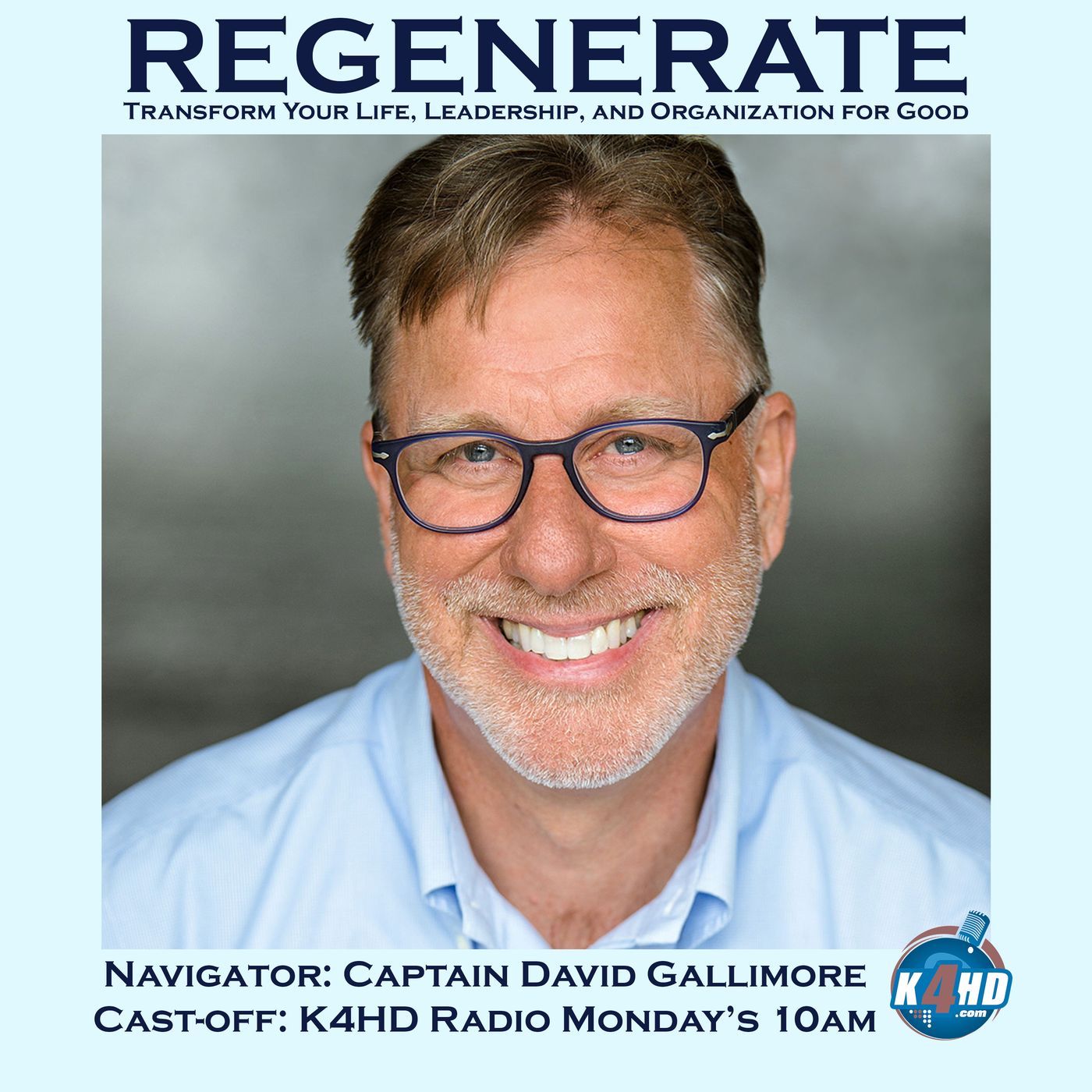
What if the real constraint in your leadership is not strategy or talent, but the quality of thinking conditions around you? In this episode, Dr Toomas Särev joins Captain David Gallimore to explore Cognitive Oxygen™ (COx): the practical discipline of protecting and restoring the conditions for wise action under pressure.
We will examine how clarity, psychological safety, and agency operate at three levels: the individual, the relationships between people, and the environments they work in.
REGENERATE is broadcast live Mondays at 10AM PT on K4HD Radio - Hollywood Talk Radio (www.k4hd.com) part of Talk 4 Radio (www.talk4radio.com) on the Talk 4 Media Network (www.talk4media.com). REGENERATE TV Show is viewed on Talk 4 TV (www.talk4tv.com).
REGENERATE Podcast is also available on Talk 4 Media (www.talk4media.com), Talk 4 Podcasting (www.talk4podcasting.com), iHeartRadio, Amazon Music, Pandora, Spotify, Audible, and over 100 other podcast outlets.
Become a supporter of this podcast: https://www.spreaker.com/podcast/regenerate--6862974/support.
0:01 This program is designed to provide general information with regards to the subject matters covered. This information is given with the understanding that neither the hosts, guests, sponsors, or station are engaged in rendering any specific and personal medical, financial, legal counseling, professional service, or any advice. You should seek the services of competent professionals before applying or trying any suggested ideas. Behoy. Captain David Gallimore welcomes you aboard the Regenerate Show live Monday's ten am Pacific on KFOHD Radio at KFOHD dot com. We dive into the real messy work of transforming our lives. Leadership and organizations bring their hot mess and confusion. Lead with clarity, courage and confidence. Together, let's strengthen our resilience, accelerating the health of ourselves, people, plan and profits. Now here's your host, Captain Dave, your personal regenerator.
1:12 All aboard, hooy, and welcome to episode eight eight. That's right, that MANI fingers. Our theme this week is cognitive oxygen. When I first heard that term, I thought, this is pretty special. What if the real constraint in your life, your leadership, your organization is not the lack of strategy or talent, but a shortage of the conditions that make clear thinking possible. Today, we're going to explore that question with a guest who has spent over two decades making high stakes decisions in cardiology and now help senior leaders and teams do the same.
1:56 I know your investment of time will be well spent. And here's our prom First, going to have fun today when we're laughing we're learning. Second, to leave you inspired, and finally to leave you with one thing that you can apply before you go to sleep tonight, Rabipen Transformations happen here. It's my privilege now to introduce doctor Thomas Sarev. He's a consultant cardiologist and Fellow of the Royal College of Physicians with over two decades of experience in acute and interventional cardiology across seven countries. Truly a global physician Estonia, Finland, Sweden, Norway, Ethiopius, Sudan and the UK. He's also an EMCC accredited Executive Leadership and team coach, a certified Red Team thinker. Where I met doctor t as he's fondly called, and the creator of this new framework called the Cognitive oxygen framework.
2:53 His work sets the intersection of clinical rigor, critical thinking and human centered leadership. And what I love about doctor t is he doesn't just talk about leadership as an academic exercise the complexities of leadership, but he lives it literally every day as an active consulting cardiologist, and he knows how environments carry real weight and there's really no margin for error. It's life and death literally. Today he helps senior clinicians, healthcare leaders, and their teams protect the conditions to create wise action under pressure. Please welcome my friend and dear colleague, doctor Timas Serrev.
3:35 Thank you, Captain Dave. I'm really privileged to be here with you. I am so thrilled. You've had a long day, my friend. It's six pm in the UK. Thank you so much for extending your day on behalf of our listeners. So to get the fun started. What's that one thing that you just love to be or do that gives you the most joy? Just one thing? That's that's really cruel question, David. I think it changes. It changes with the seasons of life. And there was a time when martial arts was my center of gravity. I love the discipline of it, focus the honesty. You can't fake who you are in a dojo.
4:18 But this season it's surprise riding my motorcycle. I have a Royal Enfield super Meture six point fifty in celestial red. Since see why I did the full picture, And there is something about being on two wheels that really clears the static from my mind. You know, the wind, the engine, the road all it brings me back into the present. So you can't really be worrying about emails or tomorrow's problems. You simply you are simply there, alive to the moment. And for me, it's a kind of moving meditation. And even better, my sweetheart loves writing pillion, so it becomes joy we can share. And then there is the quieter side of joy, my dog, my family, a good book, a new idea that makes me stop and think. So the real answer is that I love anything that helps me feel fully present, fully alive and deeply connected.
5:11 Wow, that inspires, And I've seen pictures of your road bike. It's pretty pretty cool and it's got some giddy up. So before he became an executive coach, before becoming a critical thinker, Red Team thinker, before becoming a doctor, what a couple of life experiences really forged you. What's your origin story so far? In this part of your life, It's really interesting to look back. Grew up in Estonia. Estonia is a little country on this planet between East and West. I grew up during the Soviet era that shapes you in a ways you do not fully understand until you much later.
5:56 Until much later in life, you learn early that what is said in public and what is true and not always the same thing. You learn to read between the lines. You learn that authority can sound really confident and still be wrong, that obedience doesn't always make people safe. And somewhere in all of that, if you are paying attention, you discover that thinking for yourself is not a luxury, it's a survival skill. And then Estonia regained independence, and I was a young doctor watching the entire society reinvent itself in real time. And that stays with you as well, because you realize that systems are not permanent. They are built by people, which means they can also be changed by people. These are choices, not destiny. I trained as a doctor in Estonia and Finland, and then I worked across multiple healthcare systems and over time, I saw a pattern.
6:51 It kept repeating in every system, in every culture and every hospital I worked in. And what breaks teams is not the lack of intelligence. It's not laziness, it's not bad intentions. It's depletion. And that is the word I could slow down on because it matters, and people are, you know, running on fumes, and because the system has normalized exhaustion. Nobody nobody names what is happening. In fact, we often admire it. We confuse over extension with commitment. So that's that's what I observed, and that's that was the moment I recognize something is is interesting what I know now call cognitive hypoxia.
7:34 I think this idea of oxygen and breathing, it is so fundamental to life. And both of us have gone through Laura Storm's regenerative leadership journey that year long, quite frankly disruptive to my way of thinking as a you know, I guess historic colonialist and extractor, and and what lessons can we learn from Mother Nature who's been around for a three point eight billion years, She's probably learned a thing or two. And of course oxygen is fundamental to life on Earth. Certainly water, oxygen, other key minerals and chemicals in our world. So when you have a lack of oxygen, obviously patients go brain dead. And then you know, the cells start to die and organs collapse and stop working, and and the patient dies. And in many ways what you've identified, I think is so endemic to our modern life.
8:43 So let's pivot now to this exciting new framework that you've been thinking about for a long time. Finally, I hope I've had a little bit of influence in supporting your brilliance. You you know, say, sometimes we have imposture syndrome in areas of our life that are new and different. Obviously, you're a highly trained cardiologist, you know that that discipline well, but you know, being a thought leader and being a writer and being an executive coach, it's a whole new world, isn't it. So tell us a little bit about hoggative oxygen. What's the genesis, what's the origin story for this powerful framework?
9:25 Yes, so as a cardiologist, the metaphor made immediate sense to me. In the body, when oxygen endurbs, as you mentioned, function begins to fail, always dramatically at first, but steadily, quietly and dangerous, and I realized that something similar happens in leadership and in teams. So people lose conditions for clear thinking before they lose the answers. And the knowledge has not disappeared. The person has not disappeared, but their cabenty of oxygen is low. And that insight also is I'm thinking backwards. Is what pulled me into coaching and leadership development. That I didn't leave medicine. I still practice it, but I expanded the frame of it. So how can we how do we help leaders regain enough clarity to think well under pressure? So that was my big question and that then led me to this framework. So as it's simplest cognitive oxygen is the margin, the buffer space we need to think clearly and stay human under pressure.
10:31 And I think about oxygen every day. So the heart delivers oxygen to the body, and what when that supply drops, function begins to deteriorate and not and without oxygen, you know it cannot do it show well. And over time I really realized that something similar is actually happening in people, in teams, in organizations, and that is what then brought me to this concept. And it's really about marching enough inner and outdoor marching for people to think, to listen, to regulate themselves, to stay curious, and to respond rather than simply react. And I tend to see it at three levels. So first is the inner oxygen, which is happening inside the individual. Do I have enough attention, enough clarret, enough emotional steadiness, enough pause between stimulus and response to stay thoughtful under pressure? Or have I become mentally breathless?
11:31 You see, we are on a treadmill often and we push until your body cannot continue anymore. But mentally we often have a story, Oh you have done this before, you can do it. You push over, and then at some point you are on the on the verge of this kind of yeah, burnout. The second yeah, if I may add what I see in my clients. So I, as you know, I'm an executive coach like you, and I don't work with medical organizations specifically, but I do a lot with tech companies. And one of the things that you mentioned to me when we were talking about this radio show is how high activity, which can be on the surface seem like a good idea, but often it is this I think you called it cognitive hypoxia. Before where people stop being curious, they stop asking, you know what, how might we blow this up? Like a pre mortem from red team thinking, yes, they're just reacting.
12:44 And I think you called the word absence scene. Is that that sounds I say that right? So when you are in organizations, when when you're reporting in, you know, like for today, when you were working as a cardiologist, what were you noticed in terms of the activity, kind of the frantickness, if I may call it that, of just trying to get through their patient lists and maybe get a spot of lunch or not, or a snack in the vending machine. But what was it like today when you when you walked in to your medical facility. Yes, it was. It was pretty frantic day. Lots of new patients, lots of severely sick patients also, and two younger colleagues. Thankfully I had worked with both of them before, and they were inspired because I always enter a new ward and tell them that, hey, my friends, this is a playground, so let's let's be curious, let's learn something new, and let's swap roles. So actually it turned out to be a really, really good day. But often what we see is that you have depleted your inner oxygen, so you have not enough emotional steadiness, You have no pause between stimulus and response to state thoughtful, and then you are like mentally breathless and and you can't think clearly.
14:10 And then there is this social oxygen, which is like quality of our relationships. So can we ask difficult questions? Can we speak honestly before the problem hardens into dysfunction and people tell the truth. So psychological safety is not just a culture world. It's a sign that there is enough oxygen in the relational field. The third level is this structural oxygen, which is like the environment around us time, meeting, culture, decision process, reporting, lines, governance. There are a lot of elements, but because it keeps the structure, keeps people rushed, fragmented and interrupted and overloaded. Then even very good people begin loose their clarity. And this is where the idea of carrying capacity also matters. So how much strain can a system actually absorb before vitality judgment that humanity to begin to thin out? Yes, And there is one lesson from cardiology.
15:05 So if you have an ongoing heart attack and you all of a sudden open up a vessel into basically dying muscle, then there is often more damage initially if the flow returns too quickly. There is similar aspect in leadership, so it has its own version of that. So when a person or a team or an organization has been depleted for too long, you cannot simply flood the system with change, challenge, honesty, or expectation and assume that they will feel like healing. Sometimes it is destabilizing for it. The capacity to absorb truth or transformation has been reduced, and so wise leadership is just about bringing back oxygen.
15:47 It's about restoring it in a way the system can actually metabolize. That's what the element of project we have been involved with, which is richer and rate of leadership, it's very close. So these elements come together in this cognitive oxygen one set. So I am very inspired by these these ideas that you've shared, and I think it's so powerful to help create a metaphor the human body and oxygen and what you just mentioned a nuance related to a heart victim. Didn't know that, but.
16:28 In my experience, when when change is occurring at such rates in the external environment that organizations have to adapt and there they're cognitive oxygen, to use your term, is depleted. Their ability to handle that change, to be thoughtful and to be strategic or balancing being strategic with being tactical. It really is is a challenging time. Now I'm going to ask rebel our producer to put some Claude table that I put together before I joined you, because what we're talking about with this epoxia, this do dodo running crazy hours, it's got a significant impact on in your world medical doctors and nurses. This is, you know, some metrics related to doctors.
17:31 Let me make this go a little bit further. So what I did in Claude was ask about physician engagement, psychological safety, and burnout, and all of the sources will put in the show notes. So the characteristics first section here on burnout, next on engagement, et cetera. And I put UK doctors in this second column here, and then interestingly asked what was the top country the globe that had the least burnout and the best psychological safety and the least risk of issues, and it was the Netherlands. And then I finally in the last column compare the US.
18:14 Probably no surprise to you about the UK statistics, but you know things like doctors in training at high risk of burnout one in five according to twenty twenty five Survey National Survey Emotional exhaustion. This one really grabbed me. Suicide risk. A UK doctor dies by suicide every three weeks. And I could keep going down this list, But do you want to speak to maybe a personal story. You might need to anonymize the if it's another person, or if it's about yourself and how you experienced some of these really challenging metrics related to engagement, psychological safety, and burnout.
19:02 Yeah, this is this is really close to close to my heart, this question. And what I observe is that healthcare professionals are very They are very enthusiastic, or they have been at some point in their professional career, is very enthusiastic about their thing. Medicine, healthcare. You do your best to save someone's life. You have a psychological contract with your profession. And then there is this other side, the business, the managerial side, and often there's a big gap in communication. So there is a huge gap at the moment between the boardrooms of the NHS and the front line. Basically there is no communication. You have almost lost your agency and autonomy because you are pushed to do something which is not aligned with what you want to do actually, and the conditions squeak this cognitive oxygen level.
20:02 So basically you are running like like in a hamster wheel with an empty cognitive oxygen tank metaphorically on your in your backpack, and and that creates misalignment. So it also causes the identity crisis. I was myself in a situation where I had two and a half kilograms of paperwork like patient papers on my desk and I could not find time to sort it and there was no help available, although I asked for help, and that was interpreted as When I then used radical candor, that was interpreted as bulling. So basically, someone pulls a yellow card for you and says that you talk truth, but that was interpreted as bulling. I really I, I was honest, and I said that I will resign from my NHS role if nothing happens in three months and if there is no help. And there was no help, and I resigned.
21:01 I thought I don't want to become a patient on my own Catholic table. And before that, actually there was an impulse in a boardroom where we were listening some strategies to put another hospital on its knees, which was terrible, and I thought that I don't want to be a leader. I was at that time ahead of the clinic. I thought that that is not what I want to achieve in my life. I want to help other leaders to see more clearly. And that basically ignited this interest into that concept which then later got it's name. So I've been personally in this situation, and I was also seen this in boardrooms and the in executive teams. So and it's really sad that it happens. So and people often become blind they cannot see, and once you can see, then you can't not see it. So could stop treating depletion as personal weakness. We can't solve this with more yoga classes or pilates essons, and we should start seeing it as an operational condition. And that shift from blame to diagnosis is already were better leadership begins.
22:17 Absolutely right. I mean you spoke about the environment that third level, the structural level. If that's not conducive to healthy people processes, then the outcomes are going to be what the outcomes are, good, bad, and ugly. Yes, So We're now going to need to just take a quick break and when we come back, we're going to pick up a little bit more details of doctor Tomas Sarev's cognitive oxygen framework. Please stand by for this important message. You're listening to Regenerate with Captain Dave, your personal Regenerator on K for A Radio. We'll be right back. Are you feeling overwhelmed? Are you ready to regenerate and live the life of your dreams? Start the transformation now called Captain Dave at two five three two three seven two five five eight. Stop overthinking again. Call two five three two three seven two five five eight or go to regenerativeworldgroup dot com to book a free, no obligation clarity call.
23:39 Let's get back to regenerate right here on K FOURHD radio for more life changing transformations. Here's your host, Captain Dave, your personal regenerator. Welcome back if you're just now joining. I've had the privilege of chatting with my dear friend and colleague, doctor Timas Sarev, who is a consulting cardiologist and an executive coach and Doctor t Time is never our friend and I know that we would love to do both the red Team thinking conversation as well as the breath practices. Which do you think, based on what we've been discussing so far, you think is the most important that you'd like to share with our audience.
24:22 I think we could touch how this uncertain world goes on and touch an element. But most organizations make the same mistake. They assume that in uncertain conditions, the answer is more information, more data, more meetings, more reporting, more control. But you see, healthcare is especially vulnerable in this field because it belongs to a complex adaptive system. So complexity doesn't just require more information, it requires better thinking conditions. And that were also critical thinking and retin thinking clicks in So because when uncertainty rises, organizations offer, you know, start piling things on. Every xcel rator consumes more cognitive oxygen.
25:14 The result is that leaders have less and less margin to think clearly but exactly the moment when when clarity matters most. How does that look in your in your world? Oh my gosh, so so true. You know, I have a client who I spoke with over the weekend who there's so much change that they're trying to introduce relative to generative AI and how to create a human centered implementation of generative AI. They're not a publicly traded company, so the good news is they can kind of do it the way they think is best for them. But many publicly traded companies that are driven by quarterly returns. You and I that you know one are seven percent annual return on our portfolios.
26:01 So we're partly culpable. With Wall Street, uh and and other financial industries in the UK and across the globe. They are replacing people with generative AI agentic systems, and you know that's causing a tremendous amount of hardship and stress for people in the tech worlds, especially where a lot of programmers, for example, are getting replaced. So the red team thinking, do you want to just describe a little bit about if if you were knowing what you knew then now that you know now, but you used it, applied it back then when you were accused of bullying, how might you have leveraged red team thinking techniques one or two of those to help create a safer environment to speak truth to power.
26:54 Yes. Retin thinking is the decision quality engine inside cognitive oxygen framework, and it is it is the discipline of structured dissent basically basically testing assumptions before they test you. And in healthcare people quite understand quite well understand what does post mortem mean. So things go wrong, someone as a complication person dies, then we think, you know, oh my god, what happened. But I use tools like pre mor time where you imagine a decision has already failed and work backwards to find find out why. The assumptions challenge is very powerful, where you surface and stressed as the beliefs which are underpinning a strategy, and something I call we call in writing thinking four ways of seeing. It's very useful framework where you examine a situation from other person's lenses for different perspectives, for committing to a course of action.
28:00 And there is one paradox, David, and this is one I want your listeners to sit with. The more pressure you are under, the more certain you feel, and the more certain you feel, the more likely you are to be wrong. It's interesting, but it's true, and certainly, under pressure, there is often a cognitive hypoxia. Wearing a confident mask. It feels like clarity, but it's actually a narrowing of the field. And interestingly, the more expert you become the narrower your vision might become. Also, and you have stopped seeing options because you are so certain about your thing. You have stopped hearing dissent. You are running on pattern recognition without checking whether the pattern still fits. It's like, you know, becoming pregnant with something you really, really like, and then you lose your critical thinking and retin thinking interrupts.
28:54 That title creates a structured moment of doubt, and that moment of doubt is where the decisions leave. Also, it's engaging other people in this thinking. And there is there is one question what I think consistently changes rooms. If you ask what would have to be true for us to be completely wrong about this? That question does something remarkable. It gives people permission to challenge the dominant narrative without feeling like betrayal or disloyalty. And in that opening the truth often walks in. Yeah, I have personally experienced the value of that question.
29:36 I'm so glad that you brought it into this conversation. I think that masking that it's very counterintuitive as a leader, and I had to learn this the hard way. I was leading a very complex turnaround program for BC Hydro nine hundred and thirty million dollars smart meter Implementation program, and we were already two months late, and we had to get a certain amount of scope done in two years because of the provincial funding and the law that had required this project to be done by the end of twenty thirteen, and I frankly did not know exactly how I was going to get this done, and so I had to admit to my leadership team, you know, I'm really needing your help. I know you're looking for me to point us in this direction and be very clear about that. I'm clear about some things, but I'm not confident. But the power, you know, admitting that that authenticity and vulnerability asking for help creating then a little workshop that I facilitated, and we were able to bring wonderful cross section of people that had different perspectives of the elephant, if you remember the Three Blind men and the and at the end of a half a day, not only did I get smarter, but I think everybody else got a lot smarter, listening deeply to each other,
31:10 and we emerged with a strategy, and one of the keys to it was this word called decoupling. We had twenty three different vendors and a lot of new technology that was bleeding edge, and you know, certain deadlines from certain companies were being missed. But still this two year runway, that's all we had. We couldn't go beyond that. So we had to decouple things that were late and slide other things in its place so that we could hold the critical path and that vulnerability. I've never forgotten. It was scary at the time, but it was such an affirming experience that now from this point on, I just say, you know, here's what I know to be true, and here's the facts and data to support that.
32:00 But here's where I'm not clear at all. What do you think? And then shut the f up and listen. We have two ears and one mouth for a reason. And the power of the team and using red team thinking approaches like you just outlined, I think create some structure for healthier conversations. And that is very close also to reach generate to leadership, because if you're depleted them, so you jump to conclusions your great situation we call groupthink and satisfying you know, the first idea and then you go with that without actually holding the space holding the complexity, so and reach and rate of leadership requires something different. It requires the capacity, I think beyond the quarterly cycle, so to hold multiple perspectives.
32:52 I think it thinks really well together with the critical thinking techniques. Also just to sit with them biguit long enough for the wiser answer to emerge. I think that's really important. And we do so many mistakes when we jump to conclusions too quickly, not talking to people, not asking questions. Often I see it in healthcare. A manager comes in and says, Thomas, we have this challenge. You have to do X, Y Z, and then Thomas thinks that I don't like it. That's wrong, it's not the right thing to do. Instead, if the manager comes and asks Thomas, doctor, Thomas, we have this challenge, and I know that you are most resourceful here, so what would you do? It is a different coaching style leadership which makes you you think, you zoom out from the situation.
33:42 You come to better decisions, and especially in a team setting, that creates more communication, more questions, more listening, and in that field than using your airs and mouth in the same ratio as the creator has given these organs to us. He's really really important. Plus you get better sin in the game to implement whatever ideas emerge from those discussions. It's one thing to come up with an answer, it's another thing to implement the answer. Yes, yes, So in. The final third of our regenerate show, my friend time is never our friend. Sorry about that, We'll have to have you back if you're willing. I would love, love, love to be a bit of a patient. You being the doctor related to the breath acronym, and would you be willing just to describe it and then let's try it out so that our listeners can see you in action.
34:41 I think it's so powerful this idea. Yes, let me briefly explain. So, breath is a mnemonic for the seven daily practices or cognitive oxygen. And yeah, it sounds a bit cheesy perhaps to some people. I don't excuse you at all. I think I can actually remember those things because of it. It makes a lot of sense. So b is for behold to suspend automatic judgment for long enough to see clearly what is actually happening before you react. You notice. So that sounds really simple, but under pressure, it's one of the hardest things a leader can do. We often jump to solve the problem. But if you just hold it a little bit longer so that you break this automatic judgment cycle. So that might be a good good first element, so being the.
35:35 Risk of assuming yeah, because we are then sorry, go ahead. R R is for regulate, so restore enough inner steadiness to avoid a kind of contamination in medical language, contaminating the field. If the leader walks in anxious, the room becomes anxious. You know, regulation is not suppression. It's it's like choosing what you bring into the space. So regular E is then or engaged deeply to listen for week signals, listen for hidden concerns and what is not being said. And this is where the social oxygen lives or dies. So it's it requires good listening skills, like like old you know valve radio. You remember these old radios were there were glowing lamps inside they picked up all the wavelengths even between the stations. Metaphorically, B like that, and A is then for articulate reality. So put reality into language early before it hardens into into dysfunction. So name it, name it, what is name what is true. The earlier you name it, the more options you have than teased for test assumptions. That is actually rich team element challenge assumptions, wuiden options, losing the grip of premature certainty, and I like h H is for hack the system, to take one small real world step to test a better way of working. Not the ground transformation, but in complex adaptive systems.
37:09 We need safe to fail experiments. So prove it works in miniature first. You know, complex system in Kineffin's framework is like chess. Chess game with small little elements. One moves everything else. That's a really hard place to work an ease for enable the ecology to protect them the rhythms, boundaries and relations and conditions that keep oxygen circulating in the system. So this is a kind of stewardship practice. So this is where also cognitive oxygen meets regenerative thinking and and here is the beautiful paradox at the heart of it. So the discipline of breathing whenevery instinct says says you move faster, so you just do the opposite.
38:02 The coaching question, what if the opposite is true? Is really valid? There? How does how does that sound? I love it? Do you do? You want to? Now? Maybe guide me through. We've got about three or four minutes to guide me through. This breath approach. Yes, so you you you don't need hopefully a lot of time to do it in practice, it's in essence taking a deep breath and pause and think through these steps. So, how can you become a better in your decision making? How to stop this automatic judgment long enough? And then once you take a deep breath, you lower your shoulders, you regulate your emotions, You enter say, meeting room in a different different way, and then you you are present, you engage deeply and then reflect back what is real, what's going on? And test the assumptions.
39:06 And maybe ask the team what are they seeing exactly? Engaging rather than me telling. That requires some vulnerability. You can ask do I have blind spots here? What are we missing? That requires curiosity and that requires that steady good emotional regulation. So emotional intelligence has to be a good level. If you are stressed and run out of your cognity oxygen, you're not able to do that because then everything new is like, oh, go away, I don't want to hear you're hiding your below the line. That is a way of thinking yourself into better space. Also, you can ask can I break?
39:50 Can I do this? Can I go through these steps and it can be like a self reflective process which helps you to get clarity what you need to do if you in a really difficult situation and perhaps run out of options, and that will give you some options, you know it, So he helps, right. It's so interesting that to prepare yourself as the leader going into such. A meeting that you breathe. Yeah, it's it's not about telling yourself a mantra or necessarily you know, eating a certain food or going for a run ahead of time. It's as simple as just take a few deep breaths and if we can have agency in our state.
40:38 Right. And I saw this when I was in the corporate world going from back to back meetings and now in the virtual life that we lead back to back zoom calls literally no time to breathe between. And I suspect you as a doctor, there's a tendency to just next patient, next patient, paperwork, next patient. And yet if you don't have that self awareness to say, man, how do I bring my best self in this next patient encounter or the next corporate meeting, then I'm I'm going to have epoxia oxygen hypoxia again.
41:20 Yes, And there are some tough questions which which give you kind of rapid qalnitive oxygen diagnostics. So you run originative world group. You're building something meaningful if I ask you some hood questions so we can see what surfaces. So, for example, one really good coaching question is what conversations are you not having? Yeah, I've been pondering something like that question. Thank you so much for asking it. You know, I still think I have quite a bit of imposter syndrome related to asking for my ideal cloud, who is a generative, purpose driven client. I keep telling myself I need to take another certification program, I need to read more, I need to hear you more regeneratively myself.
42:11 So you know, I'm putting the finger on my own nose and acting in alignment with with my values. But the truth is it's just fear and those are excuses and and so I've been reaching out to more people that are my ideal client and that can afford to pay, you know, the for the kind of value that that you and I can bring. But I think you and I share this tendency that maybe I'll do that later when I feel like it. Yeah, I hear you. It's it's very very very close to me that that problem as well. So that means that we are having this imposter type challenges, that we are working outside of our comfort zone. And I feel in this space as a trapeze acrobat. You know, I have left one and then not yet grabbed the next one.
43:05 Really and that is very painful sometimes space to be, but it's also fruitful because you learn all the time. So we're down to the last couple of minutes. How can people learn more about you and your work? And I'll be sure to put these in the show notes. People can and connect with me via LinkedIn and I will respond to every message. I'm writing a book together with one of my friends who is a nurse, so it will be not another leadership book, but it will be a book how to be more human in healthcare, and perhaps the Cognitive Oxygen Framework book will be the next one then excellent, and I have applied for a trademark which is very close to be finalized for that framework.
43:56 So we are in this book. We are week eighteen at the moment, and I'm publishing some snippets on LinkedIn with some small little experiments people can try. Oh brilliant, will implement these cognitive oxygen and framework elements into this work. Excellent. And the last question before we wind down is, you know, is there anything that you've not yet shared that is really really important to you. Maybe just take a minute and tell our audience that one thing that you'd like them to leave with. Yes, The real question is never whether you are under pressure.
44:36 You are, we all are. The question is whether the conditions around you allow you to think clearly inside that pressure and protecting those conditions is not the luxury, it's the most operational thing a leader can do. So here's my invitation. So this week, ask your team just one of those five diagnostic questions, which below to the framework. One was the question I already asked you. Another is what decisions are under unclear or stuck? Third question is where do people hesitate to speak? Fourth is what the assumptions have gone unchallenged? And the last one is who lacks permission to act? So these questions are quite powerful, and I hope that today's conversation has added a new layer for your listeners thinking, thank you, thank you for invitation.
45:34 So regenerate show listeners, thank you so much for investing your valuable time with Doctor T and our entire Talk for media team. We wish you great health. Consider reviewing one thing that you would be open to applying. We're better together. Thank you for listening to Regenerate with Captain Dave and i'm K for HD Radio. We invite you to give yourself grace, embrace the messy middle. See you every Monday at n am Pacific time. Until then, you got this


