
The Great Unburdening: Swedish Death Cleanses, Debt Freedom, and the Courage to Live Lighter

 iHeartRadio iHeartRadio
 Apple Podcasts Apple Podcasts
 Spotify Spotify
 Pandora Pandora
 Youtube Music Youtube Music
 Deezer Deezer
 Spreaker Spreaker
 Podcast Addict Podcast Addict
 Castbox Castbox
 PocketCasts PocketCasts
 Castamatic Castamatic
 Goodpods Goodpods
 Overcast Overcast
 Podurama Podurama
 Podverse Podverse
 YouTube YouTube iHeartRadio iHeartRadio Apple Podcasts Apple Podcasts Spotify Spotify Pandora Pandora Youtube Music Youtube Music Deezer Deezer Spreaker Spreaker Podcast Addict Podcast Addict Castbox Castbox PocketCasts PocketCasts Castamatic Castamatic Goodpods Goodpods Overcast Overcast Podurama Podurama Podverse Podverse YouTube YouTube
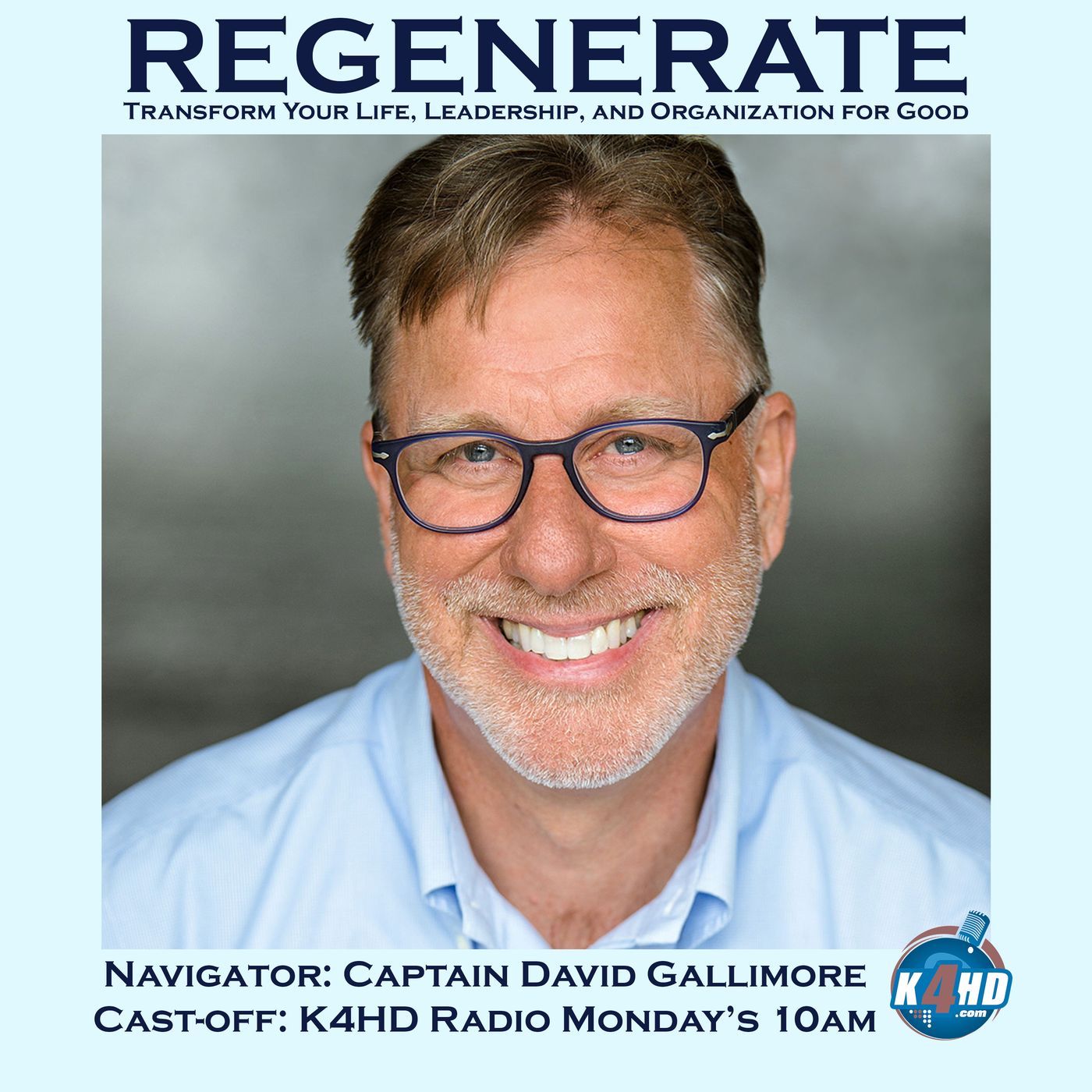
How do you close the gap between what you say you want and how you're actually living? This Monday, Capt. Dave becomes his own guest and shares how a Swedish practice called döstädning opened the door to renovating and selling the family home, becoming — and remaining — completely debt-free, and confronting the beliefs and biases (hello, sunk cost!) that kept him anchored to a life he'd outgrown. Regeneration begins with what you release.
REGENERATE is broadcast live Mondays at 10AM PT on K4HD Radio - Hollywood Talk Radio (www.k4hd.com) part of Talk 4 Radio (www.talk4radio.com) on the Talk 4 Media Network (www.talk4media.com). REGENERATE TV Show is viewed on Talk 4 TV (www.talk4tv.com).
REGENERATE Podcast is also available on Talk 4 Media (www.talk4media.com), Talk 4 Podcasting (www.talk4podcasting.com), iHeartRadio, Amazon Music, Pandora, Spotify, Audible, and over 100 other podcast outlets.
Become a supporter of this podcast: https://www.spreaker.com/podcast/regenerate--6862974/support.
0:01 This program is designed to provide general information with regards to the subject matters covered. This information is given with the understanding that neither the host, guests, sponsors, or station are engaged in rendering any specific and personal medical, financial, legal, counseling, professional service, or any advice. You should seek the services. Of competent professionals before applying or trying any suggested ideas. Ahoy! Captain David Gallimore welcomes you aboard the Regenerate Show, live Mondays, 10 a.m. Pacific on K4HD Radio at K4HD. com. We dive into the real messy work of transforming our lives, leadership, and organizations. Bring your hot mess and confusion. Leave with clarity, courage, and confidence. Together, let's strengthen our resilience, accelerating the health of ourselves, people, planet, and profits. Now, here's your host, Captain Dave, your personal regenerator. All aboard!
1:17 Ahoy, friends, and welcome to Regenerate. I'm Captain Dave, your personal regenerator. During the show, I strive to create a safe space for guests to share authentic, and vulnerable true stories about the messy middle of their personal, professional, and organizational transformation. These stories are so needed right now, aren't they? Given the challenging times of global political and climate uncertainty and the disruptive nature of generative AI, we're all trying to figure this out together. I want to point to hope. Regenerate is about how you can become somebody who brings more resilience and purpose and authentic energy to the people that you love and to our planet, our only ship that desperately needs our loving support. So what is the definition of regeneration? Well, my definition continues to evolve as I learn and live. What I've learned from Laura Storm and the second year of my regenerative leadership journey It really draws on 3.8 billion years of life's own logic, restoring vitality across every living system. So ourselves, our pets, our families, all of our communities, together we transform beyond merely doing no harm, which is kind of the definition of a sustainable living, and instead becoming like a healthy forest, endlessly regenerating, resilient, abundant conditions for all life. across all
2:50 generations to flourish. And as a soon-to-be second-time grandparent, our grandson will be born in just a few short days, building on Daisy, our two-and-a-half-year-old granddaughter. I think about this every day. What life do I really want to leave my children, Ian and Catherine, and our grandchildren and generations beyond? So one of the things I come back to again and again on this show is when you become a teacher of regenerative transformation, when you take one insight from a conversation like this and pay it forward, that's when your own transformation deepens and accelerates. And that's the compound interest of time well invested. As my mentor, Joe Pine, who just wrote a book back in February of this year called The Transformation Economy, which I highly, highly recommend.
3:43 The secret to regeneration, I believe, is learning from people who are living it. In the mud, fingernails dirty, in the messy middle, not from the polished performative summit. Then doing the inner work to shift our habits, beliefs, and ultimately our identities, and then sharing what worked for each of us with others. Otherwise, I think just keeping some of these messy middle stories to ourselves, I don't know that we are serving our friends and family and community as well as we could. It's, it's a bit more vulnerable, but I, and authentic certainly, but I assure you when I made the leap, when I mustered the courage, uh, to share my own messy middle of what's been going on, especially the last four and a half years, which I'm going to describe, I'll be my own guest today. Yeah. You, uh, and I'm looking forward to, uh, hearing comments and engaging with you as this podcast winds its way through the social media podcast platforms. I think it's an important topic of sharing the messy middle with people that we love because I think it can inspire others to do the same.
5:00 And together, then we can create ripples. One of the reasons I created Regenerate, this show, is because I'm dedicated to lifting purpose-driven leaders up and connecting them in bonds of love, adventure, creative leadership, and of course, impact. As a transformational guide myself, a maritime captain, and a lifelong learner, that's what I've been dedicating this chapter of my life. And I'd love to have you deepen your own regenerative journey by joining this swiftly growing movement. So thank you for being here. And if you're a longtime crew on this voyage, I appreciate you deeply. If you're joining us for the first time, welcome aboard. I hope you discover something today that changes how you see yourself, how you may see each other, and especially how you may see the planet in a new way and to see what's possible.
5:50 In either case, please share Regenerate. Share these conversations with someone who needs them. Be their teacher. Invite more people into the movement. And if you have ideas for future guests or topics, corrections, of course, are always welcome or feed forward. How can I improve? I personally want to hear from you. please reach out to david at regenerativeworldgroup.com. And Rebel, I'll ask you to put that in the banner. That'd be awesome. Rebel's our ace producer of The Regenerate Show. And we'll also add that email to the show notes. And please subscribe and leave us a review or comment on whatever platform you're listening to right now. Your support invites more purpose-driven leaders to find their way to this community and to navigate to a bold, regenerative today and future.
6:38 for all generations. We are better together. Now let's go regenerate. So our theme today is the great unburdening, Swedish death cleanses, debt freedom, and the courage to live lighter. So how do you close the gap between what you say you want and how you're actually living? Today, I'm my own guest, as I mentioned, and I'm going to share how a Swedish practice called, I'm going to mess this up, I'm sure, Dostanning, opened the door to renovating and selling our family home of the last 10 years, becoming and remaining completely debt-free. Never thought I would say that. And confronting the beliefs and biases below sunk costs that have kept me anchored to a life I'd outgrown. And so regeneration also, I think one of the principles is to, it's in the stage of wintering, is to begin to release and This hour is your permission to let go of what no longer serves you. So listeners of the show frequently say their time was well invested, but I invite you to have fun, to leave inspired, and to leave with one thing you can apply before you go to sleep tonight.
7:53 So please grab a pen. Transformations happen here. So I'd like to begin my story in the corporate world where I was doing a project for homesite.com. I had a team of about two dozen folks. We were doing some really innovative generative AI, large language modeling, um, to sell more insurance and have the operational costs of selling more home insurance be significantly less. And I'd been doing tech projects for over 40 years. Um, they were often very challenging, uh, incredibly tight deadlines, high expectations from senior leaders, limited budgets, but I would always find a way. And during that homesite.com project, this was back in November of 2021, I was just glued to the internet to listen and hear the stories about what was coming out of Glasgow, Scotland for the COP26 COP, I believe it's called Community of the Participants.
9:05 I think that's what that acronym stands for. But it's basically the world leaders that come together every year and all with the purpose of trying to come up with better plans to hold each other accountable for how do we reduce our carbon footprint? How do we regenerate, not just sustain our current lifestyles and improve the health of the planet by reducing the fossil fuel driven and nature driven. Both are responsible for the rising global temperatures. And for those of us that are living through this summer, Seattle has been actually in better shape than, than we were last summer. But Europe is, absolutely going through a heat dome and over 40 degrees Celsius, over 100 degrees Fahrenheit temperatures.
10:06 And Europe really isn't set up like the US for air conditioning and ice and things. So it's really hitting them very, very hard. And my pessimist, Dave, says that that's going to be more of our future. regardless of whether Mother Nature has her finger on the scale and is producing greater atmospheric temperatures, ambient temperatures, or whether human beings are, which is my belief. The preponderance of the scientific community globally is aligned to that human beings are the ones that are driving the majority of the increase in temperature. Mother Nature is in a receding ice age, so that's contributing certainly. our collective shit together uh we're going to we're going to have a planet that is going to start to kill off not just insects which it's already been doing but and certainly certain species that are at risk in in hotter climates but human beings there's there's no guarantee that human beings are going to adapt fast enough to the changes that are clearly accelerating if you look at the um the evidence and I can put some of that in our show notes as well.
11:22 So back to November of 2021, uh, the world leaders were doing a lot of blah, blah, blah. They, they really were having a hard time figuring out, um, what was possible at this stage. This would have been in 2021. Um, many of the major consumers of fossil fuels, China, uh, India, the United States, you know, largely the developed world, but also fast growing economies, for example, in India and China. And there was talk of reparations, you know, payment to those that are most injured, who are doing the least amount of the burning of fossil fuels. And so it really didn't go anywhere. And I remember turning to my wife, Margaret, and said, you know, I've had so much privilege. I've had so many opportunities to take on these challenging topics of how do you create alignment and move large teams forward to a common mission, create an environment where people can come and do their best and most creative work and help them remove their own impediments or if they're unable to do so, or if it's a systemic impediment or obstacle. then that's the role of leaders, right? To create that environment and to remove systemic impediments. So I've been doing that successfully in the corporate world. I said to Margaret, hey, I'd like to really give it a
12:54 shot here in the professional world. And I joked with her, I said, I'd like to kind of kick the corporate crazy to the curb and try again at my entrepreneurial life. So she was all in, what I love about her, she has great trust and faith people and certainly in me. And that belief has gone a long, long way the last four and a half years. So I gave my notice to Homesite and everybody said, wow, you know, what a noble cause. And I'm glad you're doing that. And so I was off to the races. And now here's where it gets a little bit more challenging. I had no idea that of the 205 or so meetings that I held over the first six months. So this would now be January through June of 2022. I had similar reactions to CEOs and senior leadership. Oh, how noble, you know, I'm so glad you're doing this, but right now, you know, we don't have any money to hire you to help us become more sustainable was, was kind of what I was selling at the time, more sustainable business, less extractive, more circular, uh, taking care of psychological safety, even before it was a thing, increasing engagement, even before that was a thing, because I saw it in my own projects.
14:18 When I was able to do turnarounds, it was really creating psychologically safe environments and really leveling up the collective engagement and then channeling that engagement and aligning it to a common purpose, the end result of the projects that I was leading. there were just a myriad of excuses. One was, yeah, we just don't have that as a priority right now. We're trying to raise money to go public. We're just trying to cover payroll. We're just working on finishing our current set of projects for the year. And so over those 205-ish conversations, I attracted not one client.
14:59 And I was starting to panic a little bit. Fortunately, we had a pretty good runway. I had about a year of income and we were keeping our lifestyle. So probably close to $ 20, 000 a month across different properties and education for the kids and just maintenance and property tax and insurance, medical insurance. By the way, being a small business owner and paying for your own medical insurance is Oh my gosh, that tripled our budget. But we tried to keep our lifestyle and we're burning through runway, burning through finances that we'd saved to make this pivot. And so I had to kind of eat humble pie and realize that maybe I was just a little early or I wasn't the right guy or for whatever reason. So I pivoted more toward the startup business coaching and career coaching that I had been doing as a bit of a side hustle while doing these tech business programs. And we attracted good money and we were, we were doing a lot, a lot better. And if you remember the Trojan horse story, rather than coming through the front door with my clients, I kind of came through the side door.
16:22 And once I had built a lot of trust and rapport with them and we'd achieved a lot of what they had hired me to do, I would start to ask questions like, so, scale of one to 10, who's responsible for our rising global temperatures? Is it zero, Mother Earth in the receding ice age, or is it 10, 100% responsibility or human beings? And then I got their answer. And then I would ask the second question, which was, so given what you believe, what are you doing about it? Obviously, if they were a zero or a one, which was not very frequent at all. Most people in the Seattle area where I live, they were in the five, six, seven out of 10, meaning that human beings were probably tipping the scale just a little bit. Mother Earth was responsible for about half, but we were responsible for more.
17:17 And less than half Mother Earth and us more than half, sorry, that higher level math. So I started to realize that this was going to be a long journey. And so I committed to being a part of learning and growing. I've got a little bit of a roadmap that I've created, and I can post that in the show notes. It was fascinating to move from a progression of realizing that recycling and buying organic and local was probably not going to be enough to improve the health of our communities and the health of our planet. It was going to take something other than sustainability. So in the summer of 2024, so I'm kind of two and a half years into this adventure and, you know, making okay money, not great.
18:16 We started to trim our lifestyle, you know, to have the sales fit the cloth. But I was passionate about what I did and Margaret was very supportive. And so we pressed on. But in the summer of 2024, I really had a crisis of confidence. And A lot of challenges within the family. Clients that loved what we were doing together were starting to say, yeah, I think I'm going to pause coaching. So it got to be very, very financially difficult. So we trimmed our lifestyle even more. And we started to realize that we didn't value the stuff that we'd been acquiring over the years nearly as much.
18:59 What we really valued were experiences. And about this time, Daisy was born. And so our emphasis really shifted away from buying stuff and selling our 3,800 square foot home to starting to really question, why are we doing this? And is it fair to the rest of the world and future generations to continue to buy stuff that really doesn't serve us? I would call it sometimes more retail therapy. So we were really, really getting much clearer about our values and living our values. Not easy, especially when I know personally I can be quite attracted to the things that I've worked hard to acquire, be it you know the home a nice vehicle a boat you know other other nice consumer products right that that make our lives more fun make our lives a little bit easier so that was a very interesting time to do inner work and realize that yeah i don't i i I'm not my title. I'm not my income. I'm not my stuff.
20:15 I'm a person, just the miracle of all the sperm and all the eggs that came together to create me. And that's more than enough. So I think I'm going to pause because you've been hearing me yak for a good amount of time. And I'm going to ask Rebel to please play the short commercial. And when we come back, I'm going to talk a little bit about the last, I would say, six months and the Swedish death cleanses that Margaret and I have been doing. Not one, not two, but three, and how we've been on a mission to simplify. You're listening to Regenerate with Captain Dave, your personal regenerator on K4HD Radio. We'll be right back. are you feeling overwhelmed are you ready to regenerate and live the life of your dreams Start the transformation now. Call Captain Dave at 253-237-2558. Stop overthinking. Again, call 253-237-2558 or go to regenerativeworldgroup.com to book a free, no obligation clarity call. Let's get back to Regenerate right here on K4HD Radio for more life-changing transformations. Here's your host, Captain Dave, your personal regenerator.
21:52 Ahoy, and welcome back. I'm so glad you're here. I've been my own guest today, and our theme has been, how do we shed? How do we reduce our consumption? I call it the great unburdening. And this has led to reducing stuff in our lives as well as we're now debt-free and really developing a new way of living a little bit lighter. So this next half of the Regenerate show, I want to talk about the last six and a half months. So in January of this year, we were absolutely dedicated to selling our home. It turned out it was... Just such an expensive piece of property.
22:41 Taxes had gone up a third. Property taxes had gone up a third. Our beloved Siberian Husky Asha passed after a very, very vibrant and happy 13 years. So we feel like we got an extra year. Huskies typically pass after 12. So one of the reasons that we bought the half an acre with the house was for Asha. And now Asha was not bounding around the half an acre anymore. So that started to feel, you know, maybe there's a family that would really like that space. And so with our son Ian's help and several contractors and a fabulous realtor, Tamara Camp of the Camp team, we finished our home renovation and we put the house on the market. And we had been hoping for a bidding war, which is how we've rolled with our other six previous homes that we've purchased, renovated, and then lived in for typically eight years. This last house, we lived for 10, and we'd sell them at a pretty significant profit. That's not what happened this time. Oh, no. We got no offers.
23:55 I think for the first several weeks, we were just about to lower the price when An out-of-town executive, Wendy, and her partner, Scott, loved our home. It really fit their needs. And so there was a series of negotiations and they eventually, we settled on a price and they purchased our home. Well, leading up to the move, we had done not one, not two, but three Swedish death cleanses, which is, I think, a terrific idea. Um, the Swedes are very sharp. They've got some great cultural practices. And I think this one where the, the elders, you know, they don't want to leave a burden to their progeny.
24:44 They don't want to leave a burden to their children and grandchildren. So they start to shed, you know, before they pass so that it, uh, simplifies their life, but also makes it a lot easier upon their death, um, or their children and grandchildren who they've got plenty to do. They don't need to sort through mom and dad's junk. So that was really hard. I'm telling you, that was one of the hardest things that we've ever had to do because, as I mentioned before, we get attached. Thankfully, we had already reduced our vehicle consumption. So we went from two vehicles down to one. Our son took over our our vehicle, our truck. What was really hard for me was giving up my books. I've acquired a lot of books, and yet I couldn't remember the last time I really opened one up because of generative AI. And so co-thinking with Claude, which is my generative AI bot partner.
25:48 And so I'm thinking, well, am I keeping these books because I want people to know I'm a reader? or that I can afford books? What was the purpose of keeping all of those books when I had a lot of them on Kindle already? So if I wanted to ever refer to my most favorite books, I would just fire up Kindle and read the digital version. And so I probably made 20, 25 a lot of sortes to use bookstores. And they would just light up. They'd go, oh, wow, you're giving away this? And I go, yeah, I want it to go to a person who's going to really enjoy it and read it and use it. And so that was hard, but it was a good catalyst for them.
26:35 The next stuff, which was furniture that we had acquired after the sale of my mom's home on Mercer Island. And Margaret had integrated those two sets of furniture into our 3,800 square feet. And we didn't know where we were going to go next. permanently. We knew we were going to head to this place on the water at Lake Cushman, and it was already fully furnished. So not exactly a good idea to bring any more into that space. We've done a little bit of melding of old cottage furniture with newer or more, I would say, comfortable furniture.
27:20 So that was relatively easy. I was not as attached to furniture. But another category that we got really attached to was art. We generally buy art when we travel, and specifically Native American art when we travel in Canada. And that was really hard to give up. And in fact, we didn't. I would say a good room of the Cushman Cottage is just filled with art, wrapped in blankets and other protective layers. And I don't know that we will ever be able to shed that because there's just so many great memories. And I've been thinking, well, how do museums handle their collections? Because they've got probably a hundred times the objects in their collections than they can ever put out on the main floor for the public.
28:11 So this idea of becoming a bit of a museum in our own home and rotating art and art objects that we love so that we can kind of see things with a fresh face, fresh eyes. The... The house gets sold, proceeds of sale flow. And the first thing that Margaret and I did was we paid off all of our debt. So obviously the house mortgage got paid off. We had a home equity line of credit that got paid off. We had amassed a significant, I won't give you the number because it makes my blood blow out of my face, because we were kind of always just a little bit making a little bit less than our lifestyle, and so funding the difference on consumer credit. And not a good strategy, by the way, for those of you that may be thinking about picking the corporate crazy to the curb and using personal credit cards to fund that.
29:10 High interest rates, it just becomes this flywheel effect of printing a lot of money, or not printing, but paying every month significant interest. So that felt incredibly light. That was like the ultimate Swedish death cleanse, which was to rid ourselves of our consumer debt. And it's been amazing to be able to dramatically lower our lifestyle. I would say we're probably about a quarter of what we once spent per month. And with that, I love what I do with regenerative life, leadership, and business or career coaching as a transformational guide. And And now I can do that without all of the pressure that I've been facing for the last four and a half years. And that is worth so much to me. My son has noticed that I'm lighter. My wife certainly has noticed that I'm lighter.
30:11 I'm so much more patient with life's foibles. I still can get triggered by all of the news and the social media and how we're not really coming together as a global community right now. And certainly in the United States, we're not coming together at all. So that can be triggering. But I have way more emotional capacity, way more emotional resilience. And I do see a shift. And I'm so looking forward to exploring that shift. So I, for example, I over the weekend, did a bit of a shootout between Claude Opus, which is the earlier LLM model, and Fable, which is the latest Claude model. And I thought, wow, it's going to be twice the cost versus Opus. Fable will be cost twice as much as Opus. I wonder if it's twice as good. And so I spent almost a day Saturday developing a criteria, and I was doing three prompts. First one was, hey, what's the precedent for generative AI infrastructure, this incredible hype, all of the money, billions and billions, hundreds of billions that are being invested in data centers and the grid, the electricity grid to
31:45 serve all of those data centers. Where in history could we draw lessons? And of course, the railroads, the the internet, even the electrical grid, the development rollout of electricity across the United States, for example, semiconductor industry, and then really looking at which of those might apply the most to predict what might happen with generative AI. Because I wanted to ask the question, how do we do it differently? How do we, society, share the love, spread the wealth? Because right now, it looks like the wealth is being concentrated with the hyperscalers and the tech pros. And do we want to live in a life? Do we want to live in a world like that? And the other thing that I asked Claude, both Opus and Fable, is what's the role of regulation and government to help make sure that it's fair and equitable, that both the risks and the rewards of generative AI are shared equally. Because what's happening now, especially in communities that are signing on to have data centers built in their communities, they're paying for a lot of that infrastructure. And what happens if there's a bubble burst, which many are predicting, that generative AI, just like the railroads, had not one but two bubbles that burst. And those communities, they're going to get left
33:15 stranded with those data centers because the hyperscaler, the generative AI companies, software companies, they're just going to shut those down if, if the demand is not there. So they're taking all the risk or most of the risk. And it's not clear that they're getting the communities that are, you know, creating these data centers in their communities are, are going to share in the wealth. So that's a lopsided, uh, and unequitable exchange of value in my opinion. So that was fascinating to hear or see rather, um, Opus's view of that and Fable's view. And then the second prompt had to do with, okay, so how might we apply Roger Martin? He's a very, very smart university professor, retired now, University of Toronto. And he came up with these five questions.
34:10 What's our winning aspiration? These are strategy questions. What's our winning aspiration? Where do we play? How do we win? What are our capabilities? And what are the systems? Think of processes and tools, et cetera, in terms of that fifth question. And that was really interesting to see what Opus and Fable were able to cook up. And then the last prompt was, what's the business model? And this goes down to the fairness. What would be a way to structure our future so that you and I, if we're not paying for the software application. We are the product because it's our data. It's our use of the system that's being tracked down to the micro level location, you know, time of day, day of week, what are we doing? And all of that data is being harvested by Google and Microsoft, certainly Anthropics, Claude and OpenAI's ChatGPT.
35:11 And they're making... billions of dollars in this exchange. So that was really interesting to see what Claude and Fable came up with. And so then the last thing I had each of them do was evaluate their answers to those three prompts, evaluate themselves, their answers, and then also evaluate the answers of the other LLM. So Opus evaluating themselves and Fable and Fable evaluating themselves and Opus. And then I was the final arbiter. I took a look at my experience and which of the models created the most value in my experience over the course of Saturday.
35:55 And the net-net, drumroll please, is that Opus did a little bit better on two of the three prompts. Fable did much better on the business model. But was it worth 2x? Was it worth twice the cost? No, not even close. So I posted an article Saturday night because the cost increase started on just one minute after midnight Sunday globally. Sorry, Pacific time. So here we are Monday. Everybody who's using Plod and they're using Fable, they're paying twice as much per token as they were before the 13th, July 13th. And so my position, I'm Scottish, I like to stretch a penny, is wait until the model table catches up. And to not just assume that the newest, better, faster, cheaper model is, in this case, not cheaper, but better, faster, is going to always be the right solution. And I'm a beloved user of Anthropics Cloud, so I'm not trying to diss the company. I believe in the company. It's why I picked OpenAI and ChagiPT to the curb, because I stopped believing and I stopped trusting their values and principles.
37:25 And I do trust Anthropics, both by what they say, but also, more importantly, by what they do to back it up. But I think it's too early to pay double. especially for the complex questions that I was asking, you know, strategic questions, business model questions, certainly the historic research, the first prompt, you know, that's not going to be that complicated a prompt. So caveat emptor, you know, buyer beware. I just invite you to be a discerning consumer of these models. So time is never our friend. What I wanted to do is just wrap up quickly and say that as a result of Margaret and I making a joint decision to simplify our lives and shed our lives of stuff, what's opening up for us now is being able to spend time with our grandbabies up in Wrangell, Alaska.
38:28 We love being on Lake Cushman. And finally, I am super excited to be just two duffel bags of that I can live anywhere in the world on the water, teaching sailing, doing deliveries, just enjoying the ocean, my happy place. So we are super excited about what's next. And I just, I hope my story inspires just a few of you to be able to, A, get clear about your values and what matters most, and then to align your lifestyle to those values. And know that it's not going to be an easy process. There's a lot of, as Michael A.
39:11 Singer talks about in The Surrender Experiment, he's my Buddhist mentor from afar. You just got to let it go. And on the other side of letting it go is an opportunity to be free and to experience a lightness of being that I've never experienced before. And now at 64, I get to experience that. So I hope my story today inspires just a few of you to try this and see if you too can be free from stuff and debt. So summertime is proving to be more difficult to get regular commitments from guests. So I don't yet have a guest for next week. I've been working diligently on that the last couple of weeks. So it'll be fun to see who is able to join us next week on the regenerate show. So in conclusion, I want to thank our producer rebel and the whole talk for media team who've been there for me through the ups and downs of this last six and a half months.
40:20 Really special kudos to my producer, Rebel, who's had to receive sometimes beyond last minute themes and short descriptions for these shows. So thank you, Rebel. Stay healthy. Stay safe. We need you. We're better together. Now let's go regenerate. Thank you for listening to Regenerate with Captain Dave on K4HD Radio. We invite you to give yourself grace and grace the messy middle. See you every Monday at 10 a.m. Pacific Time. Until then, you got this.


