
Adapting to Grief

 iHeartRadio iHeartRadio
 Apple Podcasts Apple Podcasts
 Spotify Spotify
 Pandora Pandora
 Youtube Music Youtube Music
 Deezer Deezer
 Spreaker Spreaker
 Podcast Addict Podcast Addict
 Castbox Castbox
 PocketCasts PocketCasts
 Castamatic Castamatic
 Goodpods Goodpods
 Overcast Overcast
 Podurama Podurama
 Podverse Podverse
 YouTube YouTube iHeartRadio iHeartRadio Apple Podcasts Apple Podcasts Spotify Spotify Pandora Pandora Youtube Music Youtube Music Deezer Deezer Spreaker Spreaker Podcast Addict Podcast Addict Castbox Castbox PocketCasts PocketCasts Castamatic Castamatic Goodpods Goodpods Overcast Overcast Podurama Podurama Podverse Podverse YouTube YouTube
How do you find a way to regenerate your life when people you love most are suddenly gone? In this deeply human conversation, Capt. David sits down with his dear friend since college, Chris Dietche.
Chris lost his son, Diego, and a few short years later his wife, Ana. Last Memorial Day, David lost his beloved younger sister, Pamela, to her third different cancer. We explore not how we get over grief, but how we learn to live inside it for losses each of us will inevitably face.
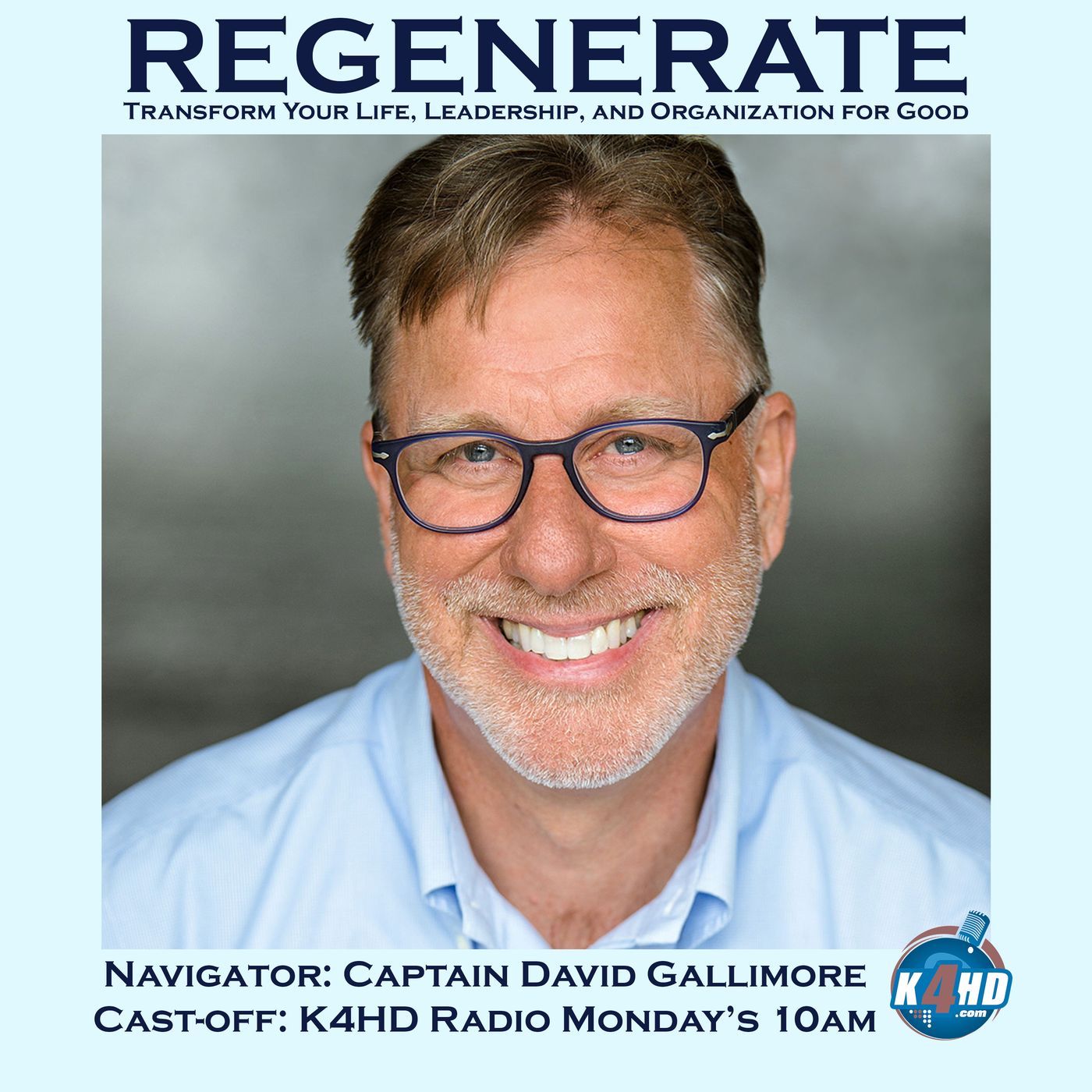
REGENERATE is broadcast live Mondays at 10AM PT on K4HD Radio - Hollywood Talk Radio (www.k4hd.com) part of Talk 4 Radio (www.talk4radio.com) on the Talk 4 Media Network (www.talk4media.com). REGENERATE TV Show is viewed on Talk 4 TV (www.talk4tv.com).
REGENERATE Podcast is also available on Talk 4 Media (www.talk4media.com), Talk 4 Podcasting (www.talk4podcasting.com), iHeartRadio, Amazon Music, Pandora, Spotify, Audible, and over 100 other podcast outlets.
Become a supporter of this podcast: https://www.spreaker.com/podcast/regenerate--6862974/support.
0:01 This program is designed to provide general information with regards to the subject matters covered. This information is given with the understanding that neither the hosts, guests, sponsors, or station are engaged in rendering any specific and personal medical, financial, legal counseling, professional service, or any advice. You should seek the services. Of competent professionals before applying or trying any suggested ideas. Behoy. Captain David Gallimore welcomes your board. The Regenerate Show live Monday's ten am Pacific on KFOHD Radio at KFOHD dot com.
0:47 We dive into the real messy work of transforming our lives. Leadership and organizations. Bring your hot mess and confusion, lead with clarity, courage, and come together. Let's strengthen our resilience, accelerating the health of ourselves, people, plant and profits. Now here's your host, Captain Dave, your personal regenerator. All aboard, Welcome, Happy Monday. I am so delighted to be here with you for episode twelve, and the theme this week is living inside Grief. How do you find a way to regenerate life when people you love most are suddenly gone? I think that my friend Chris Dchi from college. I can think of no better person to help us understand the different layers and the nuances and the challenges of living inside grief. Chris lost his beloved son Diego, and a few short years later his really funny, smart and capable leader wife Hannah, and last Memorial Day, I lost my dear sister Pamela. So we're going to explore do we ever get over grief? But how do we learn instead to live inside it? So from the unexpected ways of loss and how it requires our daily
2:17 habits through coping strategies that quietly carry us forward. So I believe that there will be at least one takeaway. Invite you to take some notes and apply one idea from today's show. I know your time will be a well spent. So our promise, if you haven't been here before, is to have some fun today, because when we're laughing, we're learning, and as heavy, deep and real as a topic of grief is, there's a way to I think approach this with humility and lightness of being. Second, we want to leave you inspired and finally invite you to take that one idea that you could apply today in your life transformations and here, so it's really a privilege to introduce my dear friend of several decades, Chris Decci.
3:09 I'll never forget prior to freshman year at our college, I was in a bus sitting across the aisle from Chris on the way to the freshman conference, which was a way to kind of get introduced to college life and start to make new friends. And I'll never forget Chris's piercing blue eyes and just radiant smile and his curiosity. And I think it was probably a good hour trip in the bus, and I realized right then that I had found a dear friend. And we proceeded to entertain three hundred plus freshman with his piano and my piano, and I always was impressed with Chris's ability to improvise.
3:55 So Chris, after college explore the theater arts very very talented writer a theater as well as performer. We all know how challenging that can be. So he had to also explore day jobs like legal field and then got involved in selling real estate. He earned his MBA in entrepreneurship from the University of Texas at Austin, where he met his beloved Honor and they proceeded to DC and he got involved in various nonprofit executive director roles, including the Connections Resource Center, Open Door Preschools, and Any Baby Can.
4:36 He is most recently the deputy Chief Travis County District Clerk. He's an executive manager of a large team and a wopping big budget. We all know that working in state and local government is not for the faint of heart, and he absolutely adores his from a professional perspective. Of course, is current leader and I'm sure he'll go into a little bit of detail about that, so please, without any further ado, Welcome Chris. Thanks David, and just to update a couple of things. I met in in college and then we went to d C washingt DC together and then I dragged her down to Texas where he had tried to escape earlier in her life and ended up. We loved living in Austin, or at least I did, and she did the best she could. And I'm the chief deputy at the District Courts Office. My wonderful boss, Velva Price, is the elected official and I was very pleased when she hired me ten years ago and we've worked well together serving the Travis County community.
5:42 Thank you so much. I appreciate the corrections. Thank you keeping the record straight. Like all good deputy clerk. Should there you go, there you go. So we always like to start the show off with that, what's that one thing, Chris that just truly lights you up that you love to be or do? And I wish I could make I want to answer, but of course the easy answer is family and friends, starting within in my boys, Diego and Santiago, and then the family that's grown through santi I would extend that out to all of my family and those friends, especially some of the friends who have regenerated with me around this loss. So it's interesting how friendships change as circumstances change.
6:24 But then on a personal level, I love art movies, I love jazz music, and I have a love hate relationship with swimming. The happy moment is when you finish exercising and you've gotten past that lazy streak of I don't want to get up, but I don't want to do this. So that's that moment of pure happiness when you have finished doing something active. Oh man, I can relate to that. I was working on a fence project as we sell our house, and every muscle. Every joint was saying, stop, go back under the covers, go to bed. But you're right. When you overcome that inertia and just find your character, it's a great joy when it's when it's done. Plus you get a cleaning in the process, don't you. As a swimmer, there you go.
7:12 Yeah, And I'm not talking a rigorous swim. I'm talking about fifteen or twenty minutes early in the morning. I don't wake up and get to it, then I won't do it. Oh my gosh. That's such the truth, isn't it. Yeah, it out of the way early. I find that my favorite way of regenerating now is being on the water with friends and family and with the new jailing students, and I get that endorphin kick and son vitamin D and physicality or that out in nature. So I know that many of our listeners have their own ways of great joy, and but we forget that sometimes in our day to day busyness and all of the email and all of the slack meetings and just you know, the modern day life. For you, water and for me water as well.
8:03 Well. And for me it's jumping into the water is and I wouldn't say that I'm a water person. It's just that's such an at our age. It's a great way to actress. Yeah, Yeah, Easier on the joints than running, certainly. Yeah. So I know that we're going to get to know each other at a deeper level through this theme that we've decided to discuss today. But before we do that, what has formed you? What is the couple life experiences? And perhaps your word not necessarily a bio, but more what's formed you? What's your origin story? Chris Well? My origin story is very linked to Anna, my wife, my partner in life, who died, even though of course I did a lot of growing before I met her in college. I come from a wonderful family, but they divorced very early and I was an only child until my father we marry and had my brother and sister much later, ten twelve years after I was born. So I was raised as an only child for a lot of my existence with one parent. I think that set up a lot of there I say, neediness around relationships and looking for a partner. And when I found in As she filled a lot of things I was looking for, and more important, beyond that, she also changed my perspective on life. While I was following her around to DC and seeing the study of law which she was exploring,
9:35 I learned a lot about community service, nonprofit work, which was fairly foreign to me. It was just not something in my wheelhouse. And so that that key relationship, which is what I then lost a couple of years ago when she died, is what actually ties in both to the answer to your question, but also the topic of this discussion is, you know, how do you take a I forced someone who not only was your partner but became the family unit and raised children. What do you do at our stage of life when you lose that partner which you might have thought, yeah, this could happen, you never think that it will happen. Yeah. I've been married now to Margaret, my friend, best friend and soulmate and wife of thirty five years. Still in training.
10:23 As she will tell you, I make sure you use the words yester dear as much as possible. That helped a lot. Oh, absolutely, absolutely. Whatever the question, just to answer yesteryear it really worked its magic. Yeah, And I think she's also realized that, especially now in our sixties, it takes two brains to be effective as we once had one brain in our twenties and thirties. And I would argue that a good marriage, you become your own entity as a couple. And that's what's star wrenching for any of us that go through life and aren't the first one to die, which is inevitable for all of us as couples. It's very rare to have two people die within proximity time wise at each other.
11:09 So this is an inevitable thing that we just don't always face and know is going to happen, but unfortunately it does happen. Yeah, well, that's maybe a great transition to our topic. And I really want to tip my hat, my virtual hat to you, because I think you came up with a really, really helpful expression around living into grief. So we're going to kind of tease that out, but i'd love to the extent that you're willing, Chris, speak about how things started to unfold and with Anna and her help and then her eventual passing, and what are some of the real challenges that you've had to navigate that we can talk a little bit about what lessons you might have learned in that process. I want to start with honor rather than the air, because obviously we've been chatting about her the last few minutes, it seems want to honor her as much as possible.
12:14 Well, the strating thing about Anna and her experience was she died from ovarian cancer and had a fairly textbook relationship with it in the sense that they said, oh, the average expectancy is a year for the level of severity and unfortunately the late catch of it. And by the way, I would put a plug into any additional screening that can happen for women with cancer, which I think they're coming up with some new new efforts, is something I would always hoped that could be increased because we as men have a lot of screening, and partly it's a cost issue. But in my mind, that's one thing I look back with regret is that Ann and me and the medical professionals didn't screen things as early as we could have and should have. So her life, her life with ovarian cancer was a year long. And the thing I would say that was so striking is she lived so fully. Any of our listeners who knew her know that she was just a life force, a wonderful, lovely person. And so what was shocking was to go through that caretaking year and be by her side and not realize that she really could be gone until the night she was gone. She lived life so fully that on the last day of her existence, she was spending it focused on her new grand baby, who's one of the other things that drives me positively through life going forward.
13:42 But she had time with her son with a man, to her daughter in law with as mate with me and died that night after having had one of the most beautiful days she had in months, because she gotten back home to Austin. She was hoping to come home. Unfortunately she wasn't able to get home. But so that in a nutshell is both the quick story of her death but also an affirmation of an incredible life that actually made it difficult to transition from because it made me miss her so much, which days to this day. Yeah yeah, and thank you for correanting the pronunciation of your wife. Oh no, she went with both both pronunciations work Anna.
14:24 Anna, Okay, I remember the Ana, but I want to be honoring how you. I mostly did Anna, but she I mean, I think Anna is probably what she would have preferred. But because I said Anne all the time. She put up with it, and one of my most famous pieces of writing is a lot of rhymes with the word banana and other things that she I don't think she particularly liked, but her friend's got to laugh at. That's great. Yeah, So yeah, my recollection of Anna. Anna is just this smart, curious, very committed to community and ethics, ethical behavior, ethical thinking, very much a critical thinker. I remember when we would host you guys coming to like Cushman.
15:17 She was always very willing to push back on something, Oh yes that somebody said yes, And I love that about her. You know, just a really thoughtful, powerful, curious woman. So I can only imagine that year of caretaking must have been. Day by day You're just seeing this brilliant person start to drop an energy, and you know, pain management and just just all of the doctor visits and the medications if you decided to go that route. And she actually she actually didn't drop an energy. That was part of what was striking about her final year. The photographs show a deterioration when I look back and say, oh my goodness, she was getting weaker and sicker, but her energy level never diminished, and she had in her last part of her career, she was working with nurses to place them in their practicum sessions. So she worked with the universities who were training our nursing professionals, and with the hospitals who often were competitive for hiring and resisted some of the training that they need to do that's required for nurses at their full certifications and degrees.
16:29 And what I'm leading up to is that even while she was being cared for, she was quizzing and talking to the nurses as fellow professionals and respecting and enjoying what they were doing and talking about their experience. We learned a lot about the struggles of nurses with the current medical approaches that a lot of hospitals were taking. So my point is, even in her year of being cared for, she was very alert to what was happening and learning around her. My other funny story about inn is I had many a conversation where the dialogue basically went, Anna, are you sure you want to say that? I think it's great that you think these thoughts, but I really don't think you should say that to X personally, And her response would be, Chris, are you trying to tell me not to say things? Are you trying to control what I'm saying, to which I would then say, oh, no, I get it. You're going to say it, so fine, I'll brace myself for the result. The thing was, most of what she said was true, so she was a little bit of a truth teller. The problem was sometimes it was hard for those of us that loved her to hear the truth and to realize, oh, my goodness, I have taken a rather awkward approach to this part of my experience.
17:39 You know, that is so my experience of her as well, and you know, just kind of taking a step time out of time for a sec. She's with us right now. Stories that we tell, and I think that for our listeners. You know, if you have somebody who's recently passed, and you wonder, do I talk out them? Do I not talk about them? Is it too painful? How are others going to react? In my experience, the stories that we tell about our loved ones that have passed, they live on. And you talk about them because the alternative is to squelch what's bubbling inside of you and missing the people. Yeah. Yeah, So talk a little bit about after her passing.
18:22 What was that like? Were you rudderless. Did you just double down on work, which is typical of guys. What did you do next? Well, I think this is where it gets to some common themes that are worth this session and sharing and extending to other people's experiences because what I found and this was I think similar for a lot of my patriots and grief groups. I've used grief groups quite a bit the last year. I didn't want to do it the first year, but I think there's an adrenaline or an over exaggeration of I gotta do this. I got to take care of this. I got to go to probate, I got to talk to all of her friends. For me, I got to obsessed with her eulogy, which I personalized and tried to speak in her voice, which was fine, but it also was a little manic and frantic. Finds me a little bit of my San Diego in the sense of the energy that was overpowering any ability to grieve or sit with sadness. And I had really good friends Marie and Marty come down, and at first I was annoyed because I didn't want to be distracted from writing the eulogy and focusing on that. But when they arrived.
19:29 They were a huge relief to just have someone to sit with, because the other thing that's an enormous factor immediately is as if any for those of us that has experienced a good marriage, we are devastated when suddenly we're alone because we didn't choose to be alone. That doesn't mean marriage is easy. It doesn't have its challenges, but we chose to be married, stay married, have children, and hoped to in it, in my case, retire into activities together. We had spent month in San Francisco area where I got to work remotely, and that was going to be our pattern, was to ease into retirement with travel.
20:10 I'm now talking a bit fast, but what I'm representing in talking fast is exactly how I falled after Guide, which was somewhat frantic shocked. It took about a year to really get to a status of not so much living day to day but letting myself come back to grieving, which means sitting. And my best example is waking up in the morning and I've had a moment where the sun hits my face and I'm flooded with grief and memories because of the vulnerability of waking up, but in my first year, I wouldn't have sort of sat with the sun and let myself just meditate on where I'm at, which is bad. So that's an introduction, but by extension, there are all sorts of ways that I think all of us instinctively get over preoccupied, at least us guys, especially with activity and things that we have to do to take care of things, clean up the house, to sort the house, maybe, to move, to switch cars, all this kind of.
21:06 Yes, yeah, there are so many pulls on your time upon the death of someone. I remember when my dad died in twenty twelve, I was the executor of his estate, and you said, there's all this communication and legal stuff, and it's easy, isn't it to kind of get pulled into the busyness of all of those activities. And then to your point a year later, you are now really in the grief and the emotion. And you know, you just touch me very very deeply when you talk about the sun rising and hitting your face, and your lifetime partner is not beside you, right, and the loneliness that creeps in or floods in maybe is more apt.
21:58 And what I would note about that is it's not something I had ever experienced before. So what's weird about losing our loved ones is that while it's deeply awful, there are new experiences that are not so much fulfilling. It's just you've got to go with the flow, in the sense of let the sun hit your face, let the emotions come, and sit with it instead of jumping up out of your chair and running to get coffee. Yeah. I think that self respect to really be attentive to the emotions, and as challenging as that is and painful at times, not to just escape it by being busy.
22:40 Yeah. Another thing I did to cope that I would offer as an interesting transition step is that I about about the six month mark, we had our college reunion, which and had made me promise to go to, which I doesn't mean I had to do it, but I chose to drive from Texas to Connecticut for college reunion, then to see some friends along the way, and I'd hoped to see some friends on the way back. That journey of driving forced a move away, and the thing that I remember saying to myself was, Oh, I don't want to do this trip. I don't want to go to reunion. I don't want to leave my house. And then I said to myself, well, Chris, why don't you want to leave the house? And I said, Oh, I don't want to leave Anna, which was the moment I realized, oh, my goodness, I got to get out of this house and is not here. Staying in the home to commune with her memory is not the best thing to be doing.
23:32 At the point. Doesn't mean that changed my life, but it did help do something completely different. Yeah, So Chris, we're going to take just a brief commercial break, so please stay tuned for more of Chris's insights, and we're going to pivot a little bit more toward the loss of Chris's son, Diegle. We'll be right back. You're listening to Regenerate with Keptain Dave, personal regenerator on KFOHD Radio. We'll be right back. Are you feeling overwhelmed? Are you ready to regenerate and live the life of your dreams? Start the transformation now?
24:17 Call Captain Dave at two five three two three seven two five five eight. Stop overthinking again Call two five three two three seven two five five eight, or go to Regenerativeworldgroup dot com to book a free no obligation. Clarity call. Let's get back to regenerate right here on KFOURHD Radio for more life changing transformations. Here's your host, Captain Dave, your personal regenerator. Welcome back if you're just now joining us. I've been speaking with my dear friend from college, Christy. She on the theme of living inside grief, and we've been chatting about the loss of his beloved Anna and the challenges of not letting busyness and activity kind of put off the important work of grieving, which is to live in the moment and the emotions well up could be triggered by a picture, a song, a smell, an activity, and you're no longer with your your best friend. And now, Chris, let's maybe if unless there's something else that you'd like to feel complete about your grieving process with with Anna.
25:39 I'd love to if you're willing talk a little bit about your son Diego and share how that was different and anything that you want to add to feel complete about your grieving with Anna. No, but I'll run. I'll run with the shift because they circle back and are very tied together. And the reason is I would introduce things as follows. Diego had severe bipolar disorder. What that meant is when he went manic, he basically entered a form of schizophrenia where he was completely out of touch with reality, and because it lasted for several days or weeks, the eventual treatment for him was to treat the underlying schizophrenia that occurred in his states of mania. Unfortunately, that's also what killed him, because in my mind, in his final days, he was thinking that he was probably in some kind of spaceship flying across the road, when actually he was driving a car and caused an accident which killed him for another person who luckily recovered, but that was a tragic part of his death. What I wanted to shift to immediately is that it's so different to lose a child. The thing about losing your partner is, even though it crushes you in his life changing, there's an element of it's part of the bargain. If you meet your partner. You may not know it, but it's one of you's going to die.
27:05 In a way, You're lucky if you go first, because then you don't have to do the soul searching and tragic experience of losing your better half. But when you lose a child. The problem is that it's kind of you. You can never really completely deal with it. And my example is when Diego died, I felt like I was like in the movies where you see someone jumping into the grave where their loved one is, or diving onto the coffin to take me with you, Take me with you. In my grief group, I had a follow traveler who when his loved one died, His version was I don't know what to do. I don't know what to do.
27:46 And I think when you lose a child, not only do you not know what to do, but you really can't fully face it. I would argue you can't ever fully face it. So I'm not trying to avoid talking about Diego, but I am trying to circle back to what I think is the second half of this session or discussion around coping and dealing with grief, and in my mind admitting that the loss of a child is much harder to sort of fathom or come to terms with. And I would argue, part of what you do in that type of losses you don't come to terms with it. My other example is I can't easily read Diego's journals partly because of the chaos of them, but I go to try to read them, and I usually immediately stop.
28:29 Whereas I found one of Anna's journals from before I met her, and it was fascinating to sort of extend my experience with her, to know more about what she was doing in the years before she and I were together. And the other thing is is I think about her mostly every day a lot of the day, not in an obsessive way, but she's with me all the time, Whereas with the loss of Diego it's a much more painful, difficult thing to even look at, much less try to experience on a daily base. So I understand perfectly what the distinction is my own experience with losing my sister, though she's not a child of Margaret's and mine.
29:10 I'm sorry. I'm sorry about that lost David. Yeah, thank you. She grew up, you know, with me, we were only twenty one months apart. My parents kind of helped me back a little bit, and they pushed her forward a little bit. I think could eased their parenting. And she was so Pamela is her name, so so capable as an athlete skiing and tennis, and a ballerina and a pianist and loudest, very very good project manager managed me quite often, which I but she was usually right about, Hey, we need to get on this thing with Lake Cushman, which you and the kids have seen.
29:53 And I am so freakin mad that she's dead, a whole different emotional angst about that, And you're right, I don't think I'll ever get over that. Whereas death of my father, my mom, who's now in. Hospice, I'm sorry, eight eighty. Five year old father, great life, ninety six year old mom extraordinary life. And when it's a child and they're taken way earlier than they deserved, there's that greater sense of potential that was lost. Yes, and then it all mixes up because, just as you said, a sister is closer to our age, so he's an older person, but not through her life. And that's and same. Anna died too young. But it was a fuller life than what Diego had. Diego had a split life. Half of it was normally developing, half of it was in his adapt adaptation to having severe bipolar disorder.
30:57 So this is where it all gets quite complicated. But I also think how we cope with any forms of grief can be sharable and worthy of discussion again, because most of us, unless we live a short life, are going to experience some really traumatic grief as we as we can live. Yeah. So one of the things that just popped into my heart and mind as you just said that last couple of words is both both Diego and I want you to be happy. You do. You believe that, sure, but but I also think that's too easy a starting point, So I would wonder where you're going with that. Yeah, so so let's let me uh kind of expound on that.
31:46 That idea that you mentioned that you know they're with you at at all times, some you know, Ana more than than Diego. I understand that difference and the journaling and the pain there, and I understand that difference and the grieving process I think is maybe evolved over the millennia that human beings have been developing. Yeah, so start interrupt, But here's here's where I would take it. The difficulty most of us face in my situation, which many of us, putting you will will and have experienced, is the balance between and now I'm going to talk broadly, but I think it's it's my main point. There's an instinct to collapse, to go into a hole, to not come out, to not leave your home. In the case of my trip, it was kind of got to get your butt out of this house because he is not here.
32:39 So there's a pull downward. And the same thing when when I grieved Gyego, I avoid being pulled towards death because that's how it feels to think about. And yet when I say I enjoy the light and contemplate grief and missing in and missing Gyego, which which sounds nice, But there's this weird balance between meditative letting your feelings be there, and the hyperactivity of recovery regenerating, which is your theme, David. The challenge is to find that, as as you said in our notes ahead of this, the messy middle, where you're not passively sitting around not doing anything, but you're also not going going crazy with too much activity.
33:26 And that's a that's to me, the challenge for not just for grieving, but sort of making the most effective life as possible. And one of my examples is work and the idea of retirement. The challenge to me is, Okay, I like working, it gives me structure. What is it I would be doing in retirement, which is a whole other can of worms, a whole other session on retirement. But I think here, here's what I was leading up to. My first instinct when I lost In in particular, was to say yes to all my friends who invited me to do anything you want to go out to dinner? Yes, Why to get myself out of my house, to get out of and I had so much time alone. But the challenge is actually not it doesn't stop there. The next step, I think is to create my own activities and extend my current friends and family with What do I do next? How do I translate the energy of a couple and a family into solo to some extent life.
34:27 Obviously I have a lot of channel into my remaining family with Santi and Amanda and Desme and a future child. So all of that is exciting, and I would argue that's the sustaining part of Diego and Ina with me as I channel them through the continuing family experience. But then the other challenges, what does Christici want to do that's from his solo activities still including In and Diego and all of those memories and family life, But what are the activities that are that become mine, which right now are were music, art, movies, exercise, changing how I eat, but to some extent that has to regenerate. And by the way, I want to add, one of the thoughts I came to around regenerating was the idea of a recreating a forest, where it's not just a natural growth of seeds planted. But the idea of regenerating is that you consciously take steps and in this case, to replant a forest, you plant the seeds or the seedlings, you recreate that forest. There's an element of spurt, spiritual rebirth or regeneration of a loss, in the case of biology, a lost limb. All of that, to me is the challenge of really trying to channel your theme, which is to regenerate, but within what you have experienced to know, and within within a lot of sorrow.
35:56 I love that reference to the forest when you and and the boys visited like Cushman, we're just a couple of miles away from the Olympic National Rainforest. Forty two inches of rain in Seattle, sixty six a year in like Cushman, and three hundred plus in the Olympic Mountains in the Olympic rainforest, and there's as much death and decaying in the forest as there is new seedlings and rising trees that are going to become, you know, three hundred feet tall and twenty feet in diameter. And it takes that whole ecosystem, doesn't it, to create a thriving forest.
36:40 And so what I'm hearing you say is you're finding your way forward to live a life that is meaningful for you and serves others while honoring and Diego and finding that balance is a day for day opportunity to mess up or to also find joy in the moment. Yeah, and in essence, we do the best we can. But I agree that that's that's the messy middle, and that's the that's the way many of us try to move forward while grieving. So I wonder, Chris, given your you know, struggles like I have with writing, I suspect that you've been journaling to help process. Have you have you considered in your next adventure to write a play or write a screenplay or something creative that honors on in Diego. The maybe that's this part of the is it could be a fictionalized story of the life that you have been living.
37:47 I love the idea, I don't know whether I will carry it out, and that's sort of the way I think we all need to consciously and practically look back on our dreams and goals. For me, the theater arts are still the essence of who I am. I've used I've used communication and writing skills in general management, and I've loved my career. I sometimes wonder why I didn't teach, because I think that might have been more directly linked to some of the things I loved. But what's need is to take what we enjoy in our relationships and studies and find a version of it that still pays the bills. And likewise, I did nonprofit management for twenty years and loved that, really liked the direct impact on the community. Wasn't delivering the services. I was supporting the early education professionals that were delivering the services to families.
38:42 I was the general manager. What fascinated me in switching to government work was it was equally vital in serving the community. Here, it's the support of the courts welv and I aren't directly, we aren't the judges, we aren't running the courtrooms directly, but our support is vast in serving more than thirty courts, setting up the juries, dealing with the public around what they need for filing various issues. We're doing protective orders, adoptions, criminal issues, We're getting the jury set up, is administering that we do passports. So I'm putting a separate plug in for the importance of government work and community service, which I think has been getting some bad rep bad reputation the last few years and is a vital, critical part of what all of us enjoy in our community.
39:33 Yeah, thank you for your service on many levels. And when I got to speak at one of your team meetings, it was clear to me, Chris, that you are a servant leader. You've created a safe and engaging environment in many ways, your theater skills, you're writing, your communication, brilliance. And a lot of that was essentially from Ana. So that's where this all circles back is I was a lover of the theater arts for many reasons, but my career was driven by my wife. Yeah. Yeah, she was such a powerful role model the power of service to others, and I suspect that being in service to others contributed in part to you know, grieving and realizing Okay, I'm going a channel, you know, this sadness to be in service to help others that are going through their difficult times through the court system.
40:25 Well, actually, for me, it's a life and Nana did the same thing of if you love serving the community, then it's hard to be driven by other things. Although another nice thing with government work is you actually develop a retirement plan and retire with some funds coming in, which is not as easy to do in the nonprofit management world. So I'm losing my train of thought except to say that for me, service was hard to let go of, and so it wasn't so much a grief shift as a as a family business. Yeah, it's just part of your DNA, isn't it. Well, well in connection with Anna. So again that's what this leads to. That's coming to a nice conclusion, is that's the challenge with moving forward. And you mentioned in your initial write up my interest in online sales, which I still enjoy as a hobby so that I can get great jazz and great art movies. But be that as it may, I'm that was a capitalistic, entrepreneurial side of me that I've I don't want to go back to, which is why I resisted bringing it into this conversation because my work pleasure is in serving the community.
41:39 Yeah, well, it's a busy time. You're just going through budgeting. I know how brought that can be. So thank you, by the way for taking about an hour out of an incredibly busy couple of weeks. You have a great show, and it's been a pleasure to join you. I'm so delighted. So we're to wind down. Sadly, time is never our friend. I wonder if there's something in your heart, something on your mind that you would love our listeners to know, in terms of a lesson or hope, point to hope, anything come to mind. I think I would throw out. I know we've talked broadly, but my sort of lessons from my last couple of years or several years and dealing with grief is that I do think there's a benefit to trying to say yes when people reach out to you. It's very hard to have them try to commiserate with you on what you've lost because they don't usually understand how we feel.
42:36 So there are a lot of awkward dialogues. But when someone says can I bring you dinner? Or can I take you out for a walk. There's a if you're grieving, there's a real benefit to saying yes, because usually we have so much time alone because we've lost our partner or our child, that there's time available to sit insult and at the same time go out and enjoy dinner. Likewise, the benefit to exercise is that it changes your body in a way that gets you out of a certain day to day. And I'm also I've become a convert thanks to my friend Dino Rojol of intermittent fasting, and the plug on that is that breaking up the idea of always eating, which was my bad habit, and realizing that there's a your body may be able to recoup a bit with several hours that added of not having food in the stomach or the body. That to me is the essence of intermittent fasting, where you have a period of time where there's not a consumption of food going on in your system. And I've personally found that's taken care of some of the aches and pains of being sixty four. Those are my quick tidbits. Also, music helps, I love I would encourage people to listen to jazz if you want to start in a jazz mode, try Coltrane's meditations and keep sure its home concerts, and then with art move. A lot of times I find watching devastating family moments is actually cathartic in the sense of
44:07 knowing what other people are experiencing and sort of reflecting on your own journey. Those are such viable tips, and you know, my addition to the cause would be the Stoics have an expression, Memento maray, remember death, not in terms of a morbid day to day thought, but more to celebrate the day that we have right now, without regret of the past, and not worry about the future, but to be truly present because you just never know. It's ticking inside you and you could be gone at any time. So memento moray, remember death and live life very good as you are.
44:48 You're such a great role model for me, Chris. I'm so grateful that you're in my life, and thank you for being so authentic and vulnerable in sharing not only the stories but all so the lessons learned. Thanks for the invite, David, It's been a pleasure. So for our next port of call, we're going to be talking about leadership with my sense and also dear friend, doctor Frank Wagner. So please join us for episode thirteen next Monday at ten am Pacific, one pm Eastern and six pm c ET on KFOURHD dot com, and then a few days later on your favorite podcast platforms Spotify, Apple, iHeart.
45:30 Thank you so much for investing your valuable time with us and on behalf of Christici Rebel Medler, our producer, and our entire Talk four media team. Please stay healthy, stay safe. We need you. We're better together. Thanks Rebel, Thanks David, Thank. You for listening to Regenerate with Captain Dave on k for HD Radio. We invite you to give yourself grace and grace the messy middle. See you every Monday at nam Pacific time. Until then, you got this. H


